My Desert Island Discs, Philip Cumberland’s selection.

An enduring programme on BBC Radio 4, formerly the Home Service is Desert Island Discs. The programme was conceived and for many years introduced by Roy Plomley, it was first broadcast in 1942.

The show’s guest is invited to select the eight gramophone records they would take with them if they were marooned on a desert island. The guest is also allowed one book and one luxury item. As many of the programme’s guests have said, it is difficult to narrow it down to just eight.

My Desert Island Discs are:

First off; Wishing on A Star by Rose Royce, with Gwen Dickey singing. It is a really beautiful song, strangely enough one I had not heard of until probably 2010 or 2012. Discovered on YouTube by accident when looking for Rose Royce’s big hit, Car Wash. Although I was pleased when I found Wishing on a Star, I wish I had discovered it a lot earlier.

Number two is, Going to a Go Go by the Miracles; I am a big Tamla Motown and Soul Music Fan and could have found probably a hundred songs from this genre rather than the few I have included. My abiding memory of this song is of a girl at Huntingdon Youth Club. Every evening she would come into the club, put sixpence in the Juke Box and dance alone while, Going to a Go Go, played.

My third record is Sing, Sing, Sing, by Benny Goodman and his band, with Gene Krupa on drums. Although this song is from the thirties it is one I love, there is another version by a Japanese band, Swing Girls and a Boy, which is also brilliant, again it is the drumming that is remarkable the opening drum solo in particular.

For four I have chosen, Satisfaction by The Rolling Stones, as with Motown and Soul I could have picked any number of Stones records, this was the second Stones record bought with pocket money; my first was, the Last Time. As a young lad, I would put Satisfaction on the turntable of the record player then lift up the feed arm so it would play over and over again until the neighbours banged on the party wall of our Council House.

Record number Five is Go Now by the Moody Blues, I loved this song from the first time I heard it and to this day it is my favourite Moody Blues song. Like a great number of other people I only discovered fairly recently that the Moody Blues Go Now, was a cover version of the original, sung by Bessie Banks, which too is exceptionally good.

My sixth choice is Love is Like an Itching in My Heart by the Supremes, another Motown record. Like nearly all Motown recordings, the backing is provided by the Funk Brothers and exceptionally good.

The Funk Brothers were Detroit Blues and Jazz musicians, recruited by Berry Gordy in 1959. They have played on more number one hit records, than the Beach Boys, The Beatles, The Rolling Stones and Elvis combined, (from the film, Standing in the shadows of Motown.)

The penultimate disc is, Moon River sung by Audrey Hepburn, I know Andy Williams had the hit with it but I prefer Audrey’s version. I enjoyed the film and have it on DVD. This is from  my own blog post about the film Breakfast at Tiffany’s, the post has the title, Moon River:

“Those of us who grew up during the sixties, well me at least, always associate that time, that decade with hope and a feeling that things were improving and would continue to improve. Breakfast at Tiffany’s has that feeling about it. A story of a journey leading the two main characters, played by Audrey Hepburn and George Peppard, away from dependency on those who sought to buy their souls, to a hopeful, better future. It is a film, like all good films for me, with a happy ending. Most of us, if not all us want happy endings, not always for ourselves but more importantly for those we love and care for. A journey on our own Moon River perhaps.”

My final record is The Lark ascending by Vaughan Williams, I could have chosen any number of Vaughan Williams works but this one is probably my favourite. The violin speaks, describing the sunlight of dawn as it sets the lark free to soar above us and move around the sky.

The show’s host always asks the guest which disc they would save from an incoming tide; mine would be Rose Royce’s, Wishing on a Star.

The guest is also offered the choice of one book and one luxury they would like to have on the island. The book I would choose is the Complete works of Raymond Chandler. For my luxury item the choice is a large note book and a big pack of biros.

Travelling to America. by Jane Pobgee

Photo by Gyu00f6rgy Tu00f3th on Pexels.com

My journey to America started off brilliantly. A taxi driven by a lovely young man (well younger than me) named Shiraz came to take me to the airport. The car was very luxurious and comfortable. I sat up front with Shiraz as it was easier to talk and lip read that way. We talked almost non stop and I learnt all about his family, he has fourteen year old twins. It made the journey pass quickly and pleasantly and we soon arrived at Heathrow.

Once I had deposited my case I then headed to security. That is always fun. I passed through their scanner and then had to be wanded. The reason was simple, I had forgotten that I was wearing my lip reading metal badge. Thankfully they soon realised that was the only thing wrong and I wasn’t an international drug smuggler or slave trader,  just a slightly forgetful dotty old lady.

I passed the time in the terminal people watching as I walked to our take off gate. Once there I introduced myself to the people at the desk and explained that I couldn’t hear the tannoys and would need to be told when to board etc. The staff were very helpful and when they were ready to start boarding they allowed me to go on the plane before the first class passengers to find my seat. Deafness has some perks. Once onboard I was delighted that I could do up the seat belt easily,  previously when I flew to America I had been much larger and needed a belt extension. So it felt good to be a regular passenger  . 

The steward was a lovely guy who went through the safety procedures with me, and then explained that when I reached Chicago my stop over I would have to collect my suitcase and go through American customs. Then I would have to put my suitcase through again so that it would go onto Grand Rapids. He was most insistent that I understood the procedure as if I didn’t do this my luggage would stay in Chicago. The flight was long but uneventful and I was glad to get off the plane  The layover was just over two hours but there were so many people trying to get through customs that it took forever. I began to worry that I wouldn’t make my next plane.However I did eventually get through and made it onto the plane the penultimate boarder.

Photo by Quionie Gaban on Pexels.com

I finally arrived at Grand Rapids only to find my luggage didn’t. Just when I was wondering what to do next I felt a hand on my shoulder, I turned to see the friend I had come to visit and I was so glad to see her because I was so tired my brain was refusing to lip read. She helped explain to the airline staff what had happened and that my luggage was missing. They managed to locate it in Chicago and told me it would be put on the next flight out and delivered to my friends address. I was asked some questions to identify my suitcase and a few other questions and I was free to leave the airport.

The very next day my suitcase arrived in the afternoon and my holiday proper could begin .

Photo by Monstera Production on Pexels.com

Looking back on 2023

2023 has been another successful year for Whittlesey Wordsmiths, Whittlesey u3a’s creative writing group.

Book launch of Dead End Tales with most of the authors

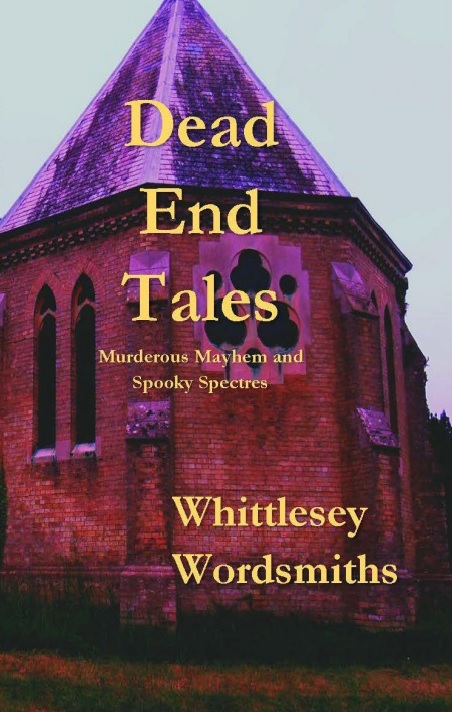
We have published our latest collection of short stories and poetry, our sixth, Dead End Tales, with illustrations by Jane Pobgee.

Stephen Oliver has received a joint award from The Writer’s Forum for his novels Shuttlers and Paranormal City.

Stephen Oliver Paranormal City and Shuttlers.https://stephenoliver-author.com/

Three Members, Cathy Cade, Philip Cumberland and Wendy Fletcher have had stories included in an American anthology, Marsha Ingrao’s, Story Chat Online Conversations.

Philip Cumberland has published a collection of his short stories collaborating with distantly related George Holmes.

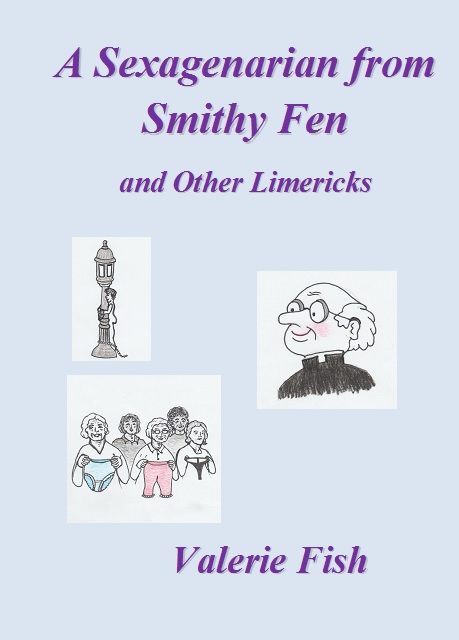
Cathy Cade has had short stories published in People’s Friend and Val Fish has had limericks published online and in print. Stephen and Wendy have had public speaking engagements.

Last but by no means least our group was joined in 2023 by published author and poet Henry Curry.

Happy New Year to you all from Whittlesey Wordsmiths.

Marsha Ingrao Story Chat

Three of our Whittlesey Wordsmiths, Cathy Cade, Wendy Fletcher and Philip Cumberland have had their short stories featured in this book. The stories were first featured on Marsha’s blog.

Fiction relaxes and stimulates intelligent, busy people, as social media and games can’t. A  professional commuting to work or waiting for the next meeting is too busy to read a long novel, but they might be looking for the next book for an after-hour reading.

Each story in the new book, Story Chat: Online Literary Conversations: Series of Short Stories and Ruminations, takes three to five minutes to read, making it the perfect book for well-educated readers who love reading fiction in short spurts. Some of the authors are just getting their literary feet wet, but many of the Story Chat authors already have published longer novels.

“Daily, we miss out on a valuable 24 minutes waiting on other people.” Patricia Murphy Irish Independent.

Everyone browses on their phone, but according to one life coach, reading is an effective way to use those minutes. Bookstores at airports, near subways, and offices where people wait carry a myriad of reading choices. Why should an intelligent reader choose Story Chat: Online Literary Conversations over a magazine or a novel?

My colleague Carmen called her quick fiction “mind candy.” Her “mind candy” came out during breaks between presentations, when she traveled, or when she needed to rest her brain.

Anthologies like this one introduce book consumers like Carmen to many authors quickly. Each story entertains yet has a deeper vein for the perceptive reader. At the end of each story are three or four quotes from previous online readers.

Online readers had this to say about Story Chat: Online Literary Conversations.

  • “I loved not only reading brand-new stories, but the interaction between readers was also great.”
  • “There was an excellent mixture of genres.”
  • “The balance is perfect. There is a good mixture of male and female writers from all over the world.

Story Chat stories were first published on AlwaysWrite.blog. They covered working and retired adults’ topics like dealing with dementia, bullying, nursing home care, social services, PSTD, surviving as an x-con, changing jobs, single parenting, and finding romance. Most of the stories have surprise or open endings. Some stories are realistic, while others mix in paranormal.

The first readers of these stories online were writers, social workers, librarians, lawyers, psychologists, professors, and teachers who each wrote an in-depth analysis of each short story in the comment section. The author and readers bantered back and forth online like they were sitting together in a book club host’s living room, enjoying their favorite beverage and snack. Each author left with new knowledge and a Mona Lisa smile.

Marsha Ingrao

Story Chat: Online Literary Conversations: a Series of Short Stories and Ruminations is Marsha Ingrao’s first experience as a contributing editor. Previous works include a chapter in This Is How We Grow (2023) by Yvette Prior, Images of America: Woodlake, published by Arcadia Publishing (August 13, 2015), available on Amazon. She has had a blog since 2012 with over 1,600 posts. In addition, Ingrao has had numerous poems and articles published during her twenty-five-year career as a teacher and educational consultant.

Contact:

Marsha Ingrao

Contributing Editor

Always Write

559-303-9241

alwayswrite01@gmail.com or tchistorygal@gmail.com

https://alwayswrite.blog

# # #

My Room 101 by Val Fish

I’m not sure how many things you are allowed to dump in Room 101, I’m afraid my list is rather long. Is that a sign of old age, am I really a grumpy, Granny ? I’m sure my grandson would have something to say on the subject. And although we do seem to go on about the youth of today, my gripes are not aimed at any one generation, I personally think us oldies can be just as bad…

Photo by Fatih Gu00fcney on Pexels.com

In order to narrow it down somehow, this is a typical day out shopping for the Fish’s…

The journey:

1 &2.  Traffic lights and cones shutting off a lane when there isn’t a workman in sight. 

3.   People on their mobile phones whilst using the zebra crossing, not even looking up or acknowledging that you have stopped for them.

(Mobiles in restaurants would need a whole new blog).

Photo by Ono Kosuki on Pexels.com

The Supermarket:

4.  People having a natter blocking the aisle with their trolleys, oblivious of your presence.

5. & 6 People packing all their shopping before getting their purse/cards out, and / or keeping the till operator talking when they’ve finished.

7.  Children sitting in their trolleys eating something that hasn’t yet been paid for.

No, strike that; change to the parents who let them.

8.  Self service tills

‘Unexpected item in baggage area, assistance required’.  Aaagh!

Retail Park:

9.  Any chain that does not have what I want in store.

‘You can order online; we can’t stock everything.’

(Then don’t complain about Amazon taking your business.)

For No 10, Prats at parking, please see Mr Fish.

I could go on, but goodness me, Room 101’s getting rather crowded, isn’t it?  

I sincerely hope I haven’t offended anyone here, and you are not one of the aforementioned people.

But if you are, please feel free to explain yourself, and I’ll consider fishing you out of my Room 101 (no pun intended)

Now if you’ll excuse me, I’m off to write a letter to The Times,

Regards,

Whinger from Whittlesey x

Author of A Sexagenarian from Smithy Fen.

Emily’s Letter by Henry Curry, a story for Halloween.

Photo by K. Mitch Hodge on Unsplash

With Halloween fast approaching the Whittlesey Wordsmiths offer you this timely story from Henry:

Emily’s Story by Henry Curry

I approached the house with some trepidation. In the distance, the Gothic arches and dark windows lent an air of gloom about the place that only made my depression worse. Shadows were already deepening as I reached the forbidding gates and a bell tolled in the distance, as if warning me away. But I knew I had to go forward, go into that place. I gripped the letter.

            Emily had been insistent; her words came to me again and again. She had sounded so firm and final the last time we had met. We were friends, no more than friends. She made that clear. As I kissed her on the cheek and turned to leave I saw her smile, but there was no happiness about her countenance. No, there was something else. I had wanted to say so much, reveal my feelings for her. My true feelings. But she had seemed so resolute, and my courage had left me. Now, an unhappy year had passed.

            I paused. A breeze shook the trees, dragging the last few leaves away to their autumnal rest. The letter seemed to weigh so heavily. I longed to stop and read it again, to ponder each word, looking behind each phrase for another meaning. But instead, I resolved to continue. My footsteps made the gravel crunch generously, a sound which had the effect of raising my spirits a little. I stepped forward, even strode, along that long drive; I even began to whistle a tune, one that Emily used to sing, my pace in time with the music, holding my emotions back, concentrating on walking, walking. Then the house was in front of me and I was at the great front door. I tugged sharply on the bell-pull, but heard no sound. A crow called mournfully as it rowed its way across the sky, its outstretched wing-tips like fingers against the  twilight. I was about to try again when there was the sound of a bolt being drawn, and the door slowly opened.

            ‘You are expected. Follow me, sir.’ The servant had a faded air about him, as if he had been too long in a dust-filled room. His skin was as pale as the stone of the building, and he shuffled with a peculiar gait suggestive of some illness.

            ‘Thank you.’ I followed him into the warm hallway and immediately began to cough, I assumed as a result of the stale, stagnant air. Light seemed to penetrate but feebly, as if an unwelcome guest, hiding from all but the middle of the floor. As my eyes became accustomed to the faint gleam from the candle borne by my guide I became aware of a number of doors and a large staircase disappearing into the reddening gloom.

            ‘The lady will see you in here sir.’ I was shown into a room which I thought was the study, or perhaps the library. It was hard to discern the  purpose of this room due to the darkness. I could see a grand desk commanding the middle, with a large high-backed chair of very old design, I fancied, given the detailed carving on its back.  In the wavering shadows I could just make out tapestries on my left, and to the right a wall of what appeared to be bookshelves. At this point the ageing servant turned to leave, and as he did so he lit candles in each of the sconces by a great mantelpiece. The light now picked out a fine long case clock to one side of the fireplace. I resolved to examine the timepiece as far as I could, but as I moved towards it, someone else entered the room.

            ‘Hello Jeremy.’  It was Emily, my Emily. But it was not her. The voice I heard  was harsh and broken, as if emanating from a dying volcano.  I turned in happy expectations, but  drew back sharply at the face before me. Her eyes! 

            ‘Emily.’ My voice came in a hoarse croaking sound. I held out the letter. My words failed me. She stared blankly and spoke mechanically, in a distant way.

            ‘I knew you’d come. But many things have changed. I… I am to be married.’  The red-rimmed eyes held my gaze. There was no pleasure in her voice, only a sense of resignation. ‘You should not have come here. Please go now.’ I was shocked, but tried to remain calm, measured.

            ‘You seem unhappy Emily. Can’t we talk further? As friends? I can’t leave you this way, having come so far.’ I hoped she understood that I meant so much more than just my journey.

            ‘Then stay at the Inn tonight if you wish. Come again tomorrow, in the morning, in the daylight.’ With these words she turned and walked away before I could speak.

I spent an unhappy night at the old Inn in the town. Restful sleep would not come to me. In my dreams I saw only vague shapes and a shadowy figure with glaring red eyes drifting through a vast library. The books were falling towards me, and there was a smell that made me choke – I was trying to speak but no sound would emanate from my throat, and the figure crackled with an eerie laughter. Another figure seemed to be present, but I couldn’t see who it was. I felt hot, fearful, in a wild panic, but I didn’t know why.

            I woke early but felt both disturbed and tired, being unrefreshed by my troubled sleep. Washing and dressing, I saw my face in the mirror – I was distressed at how old I appeared. I resolved to make light of the last night, to enjoy a good breakfast and a brisk walk back to the house. I didn’t want Emily to see me looking as haggard as I felt.

            There seemed to be a thick morning fog settled over the valley, so my view of the  house was temporarily obscured. As I turned onto the drive a vague outline of the old walls gradually materialised. But then my heart raced – something was wrong, very wrong! I quickened my pace, breaking into a trot, then a full blown run. Smoke was lazily drifting up from the broken walls and crumbling ruin – a great conflagration must have taken the house! There was no roof, only charred walls and beams. Without realising,  I had started shouting as I ran. I was shouting, shouting, calling Emily’s name over and over.

            ‘Terrible. A terrible tragedy.’ A bewhiskered man in a tweed jacket was looking up at the building and calling a cocker spaniel back to him. ‘Here, Jack, here boy!’ I roughly grabbed this chap by the coat lapels, shouting at him.

            ‘Where is she? What happened to Emily? Is she safe?’ He pulled back, placing his hands on my shoulders.

            ‘Now then, now then. Calm yourself. I’m sure all that could be done was done, young fellow.’ The dog returned with a piece of paper in its mouth. ‘The blaze just took hold very quickly, very quickly. Started in the library, by all accounts. It was burning for three days.’ These last words seemed bizarre, barely registering.

            ‘But what happened to the people – to the lady, Emily? Where are they?’ Blood was bursting up my neck and into my head, pounding into my ears. ‘Where are they?’

            ‘Ah, now, you obviously knew the incumbents; well’ he looked wearily at me,’sadly no-one survived. They found the three souls yesterday, but all had perished. The lady, her husband-to-be, and the servant. All gone.’ He gave a wistful look up at the ruins. ‘I am so very sorry.’

            ‘But… but I was here yesterday. Yesterday evening. I saw them. I spoke to them. I was here. There was no fire – they were all alive!’

He leaned closely towards me and returned a puzzled, old-fashioned look.

            ‘I can’t dispute what you say you saw or might have thought you saw my friend. The house and all its occupants, such a tragic business, were destroyed three days ago. If you were here, as you say you were, last night…’ He tailed off, frowning. Jack the spaniel, snuffled at my feet, dropping Emily’s letter.

If you would like to read more of Henry’s work find him on Amazon by clicking on the link:

Henry Curry

Is a woman’s place still in the home? By Rita Skeats

Photo by Ketut Subiyanto on Pexels.com

This is Rita’s blog post, a well argued point of view.

Is a woman’s place still in the home?

I took a special interest in a debate on the subject of: A women’s place is in the home, in high school in the 1970s.  And fifty years or so later, I believe that little has changed for women.

Our class tutor, Father Chira, was inspirational and sparked our imagination by encouraging regular debates on contentious subjects.  He was an extraordinary personality, being a Catholic priest from Ceylon (now Shri Lanka) who travelled worldwide to teach in third world countries.  He encouraged us to question, challenge, debate, be analytical and negotiate – behaviours that were controversial for women in my little backwater country, Guyana, where women knew that their place was at home and men went out to work and have fun.

This particular debating session on ‘Women’s place is in the home’ stuck in my mind because I held strong opinions on the subject and infuriated the boys of my class with my arguments against.  The girls of my class won the debate and the boys walked out in protest.

“That Budhram girl is trouble.  She cheats by reading books on the subject and her ideas contradict our culture,” they hissed in chorus and glowered at me as they walked out.

Father Chira saved the day in his cheery tones, “Young lady, you will be an advocate for others,” and we ignored the

boys.  They returned to the classroom shortly, sulkily muttering apologies.

The boys argued that women’s brains were smaller, and therefore, they were less intelligent and they were physically weaker than men.  This excluded them from work involving a high level of intelligence and strength and traditionally they stayed at home doing the house work and the caring.

Some of the girls were hoodwinked into believing the boys’ arguments.  But where was the evidence that women were less intelligent, I questioned.  No evidence was presented and I put forward the cases of Indira Ghandi, Queen Elizabeth, Goldameir, Madame Curie, very influential and intelligent women – to name a few.  Yes, women were physically weaker but technological advances made it possible for women to take on jobs that were predominantly done by men in the past.

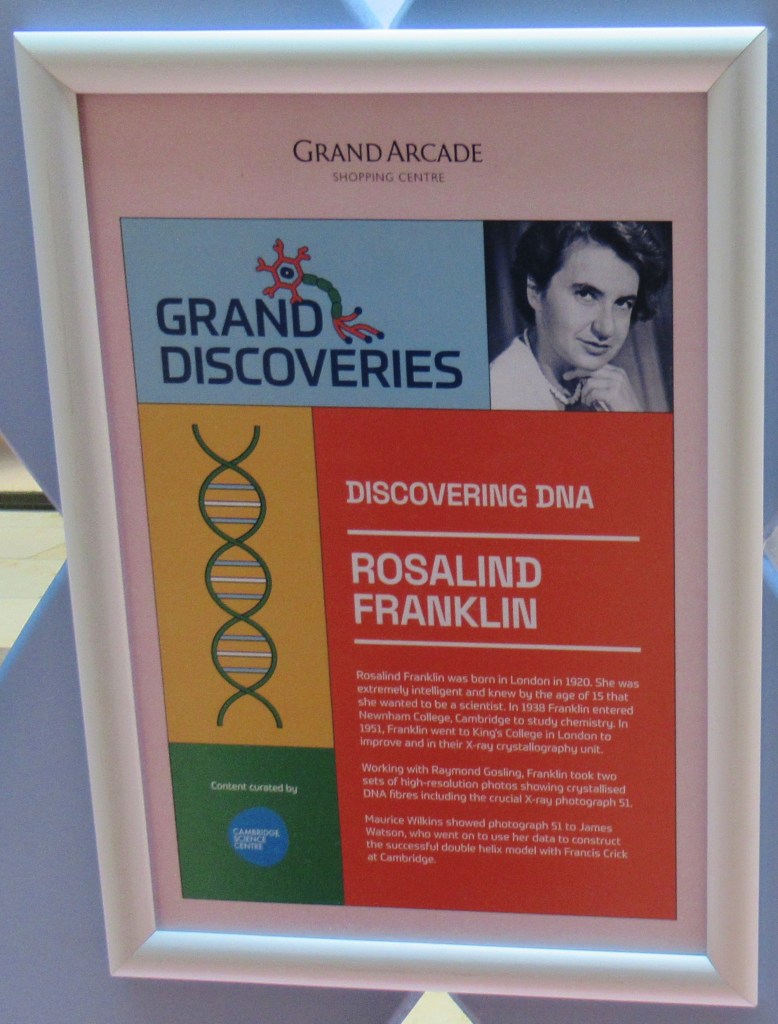
Rosalind Franklin a woman with a larger brain?

During the War years, women proved that they were more than capable to do men’s work by doubling their duties as breadwinners (taking on men’s work) and caring for the family.  However, after the War, the WHO commissioned John Bowlby (psychologist) to do studies (Childcare and the Growth of Love, 1953) on how children could be affected by maternal deprivation.  He concluded that a mother’s place was at home caring for children.  That was a blow for women’s liberation from the kitchen sink and the government used it as an excuse for giving the jobs back to the returning soldiers. Bowlby’s studies were later found to be flawed.

When I was growing up in the 1960s and 70s, Guyana was rooted in patriarchal norms and tradition, and misogyny and sexism flourished.  I didn’t think it was a fair society for women.  My mother’s work was never finished – with ten children and an absent-minded husband, she never had a break.  My father, on the other hand, had the opportunity to do as he liked.  It was a man’s world.  I thought that I was leaving behind a primitive society when I came to the UK to do nurse training in the 1970s.

I was wrong to believe that the UK was an egalitarian society at that time.  Gender imbalance was alive and thriving in British households. Many working women were in part-time low-paid jobs – flexible to accommodate family needs. In the midst of an imbalance society, sexism, misogyny, sexual discrimination, and other abuses flourish. Male nurse, Ian, was lazy and lascivious and he boasted that he was earning a third more than us (female nurses of the same grade).  “Come to the cinema with me, Rita.  I’ll pay for you,” he sneeringly condescended.  “Shame on you!  You are a married man,” I declined in disgust. “It’s OK for me to do whatever I want because I am a man,” he boasted with a permanent smirk on his ugly face.  Dr Mandel was no better. “Come to my room, I will cook you sicken (chicken) curry” was his chatline  for finding a date among the young trainee nurses.  We would ignore him and run away because he had wandering hands.  Lurking in the background was his wife and several children. Sexual predatory behaviour was normalised at that time and the media fuelled it further by churning out films, books, TV plays, etc that showed women in submissive and subservient roles in society.

I thought I might find equal partnership in marriage but convention dictated otherwise.  I was left chained to the kitchen sink with two screaming toddlers while my husband enjoyed a bachelor’s lifestyle. “You cannot stop him from going to the pub and meeting up with his mates.  That’s how we do things here in the East End,” the mother-in-law rebuked when I tried to get some sympathy.  My dreams of equal partnership were dashed.  All around me women were juggling childcare, housework and flexible part-time work for ‘pin money’ while their menfolk seemed oblivious of their plights.

Several decades after my debate at school, little has changed for women.  Although more women were employed in paid work than before, they continued to do the lion’s share of childcare and housework.  I believed that life is more stressful for women than it was in the 1970s because they they took on the breadwinner role (Both husband and wife are expected to be in paid work in order to survive in this modern society) as well as childcare and housework.  I have seen the struggles of my younger midwife colleagues juggling childcare, housework and a career that is not flexible to accommodate their family needs.

Recently progress in gender gap has slowed down or stalled due to the pandemic and poor economic growth.  Progress may require increases in men’s participation in household and care work, governmental provision of childcare and employer’s policies that reduce gender discrimination and help man and women combine jobs with family care responsibilities.  Fifty years hence, women’s place is still in the home and also in the workplace as breadwinners.

First Job?

At our last writing group meeting we decided to get on and with perking up our Wordsmiths Blog. Since the last post on here there has been a lot happening, not only have some of our members won awards and prizes but they have books and magazine articles published. We will update the site with these achievements in the coming weeks but for now a post from Sandra Hughes about her first job

My first Job

Chiesmans of Lewisham (photo credit the Bygone Years)

Aged 15, it seemed everyone in my form at school were looking for Saturday jobs, being successful in finding them before me, giving them spending power and a bit of ‘kudos.’ I was reminded of this as yet another friend mentioned seeing my granddaughter working in our local Post Office and commenting on how efficient and professional she was, and wondering exactly how many tasks she has had to learn. Obviously a very proud Grandma, this is her third ‘Saturday’ job and the aim is to continue when she starts at uni next week.

All of my children were encouraged to have ‘Saturday’ jobs and learn the importance of earning money for themselves, and now my grandchildren.

My first experience was in a department store like John Lewis, a shop called Chiesmans, in Gravesend.

I can remember going upstairs to the ‘office’ and enquiring about work and sitting and completing a form. I was successful and had to catch a bus into town, which was no different from catching a bus to school, early every morning. Staff had to enter by a back door, waiting for the metal entrance door being rolled up to allow us to enter. In the store, was an ancient lift, with a wrought iron door you dragged across to close before pressing a button to your floor.

I remember working in two departments, but not sure which order they came in. Bearing in mind it is a very long time ago. I worked in the card department, especially at Christmas, in the days of large boxed, satin padded cards. I thought that showed how special you were to someone. I also remember January Sales and having paperback books to sell. I particularly put aside a book which would improve my understanding of human anatomy and sex, of which I hadn’t a clue. I don’t think the book helped much!
The other department I worked in was haberdashery and remember the huge catalogues of sewing patterns and looking in wooden drawers to find the patterns requested by customers. Butterick and Style spring to mind. It was interesting for me as I made clothes for myself, being so tall, I could never buy trousers long enough. I had a friend whose sewing was very impressive, taught by her mother, and made my first daughter the christening robe from a Vogue pattern, which became a family heirloom. And a winter coat with cape. Mine was much simpler.

We enjoyed a mid-morning break, going up in the ancient lift to a staff café, looking over the streets below. Lunchtime would find me cutting through Woolworths to the side exit to a budget sandwich bar.

Spending my money, especially on clothes was a joy. I have always loved clothes and shoes. I earned 15/- every Saturday.

My first job after school was in a small Bank in London, which is another chapter/Blog.

To visit Sandra’s blog click here

Latest news on Three Sheets to the Wind.

Three Sheets to the Wind written by Whittlesey Wordsmiths

Excitement mounts in Whittlesey as the town’s senior writing group awaits proof copies of their latest outstanding collection of stories and poems.

We can do no better than to show you the back page blurb:

Well, well, well, the Whittlesey Wordsmiths have done it again.

They keep producing such fine work that it would almost be a crime not to publish more. With fabulous poetry and wonderful stories, this latest collection will thrill and surprise, make you gasp and chuckle, sometimes even in the right places, and for the right reasons!

For those readers who have experienced the talent of the group before, you will be delighted to hear the Wordsmiths are back, having added to their number, and for those of you who are new to the collections, you have a real treat in store, and you are very welcome.

You are guaranteed to enjoy it.

“Amazing they are still writing at their age,”    Becky, age 12.

“What, again? Really?”  Their families.

“You will still keep taking your pills, won’t you?”   Their doctors.

“How do you do it?”  Other u3a groups.

Want to buy it on Amazon?

Click here to buy it on Amazon.

A taster for Three Sheets to the Wind

Whittlesey Wordsmiths’ new book, “Three Sheets to the Wind” is nearing completion and will be published soon. As a small taster here is a shortened version of one of the stories, if you want to read the full version you will find it in the book. Don’t worry we will let you know when it’s available.

We have revised the front cover see the new version in the picture below.

Three Sheets to the Wind new cover

An unusual job for a woman.

Written by Philip Cumberland

The guided bus was an unlikely getaway vehicle but it had served her well in the past.

“It’s their vanity that makes them vulnerable,” she thought.

She had been glad to get out of her waitresses uniform and into something less conspicuous. What politician full of their own importance could refuse a honorary doctorate from one of the World’s leading universities.

 “More wine Mr Ambulant? Yes the glass is a bit dirty I will fetch you a clean one, it was the Chardonnay wasn’t it?”

Fortunately she was in the kitchen when he collapsed, nowhere near him. When they all rushed to see what was happening she was in the ladies, changing into jeans and a tee shirt. Then nipping out through the Masters Garden, a bit naughty really but not as naughty as poisoning someone. Thank goodness for the tourists it was easy to get swallowed up by the crowds. The bus was waiting in its bay when she arrived at Drummer Street. Some of those academics can be a bit handy when a girl is carrying a tray of drinks, the women were the worst, and she wondered if she had been missed yet. The Park and Ride is very useful you can park for free get into the middle of Cambridge then back to pick your car up. The luggage lockers are useful too, the jiffy bag was waiting for her, Sheila; would count it later no doubt the next job was in there too. The policemen standing waiting by her car was a surprise; she noticed them as she closed the locker door, always sensible to park near the bus shelter. Fortunately the bus was still waiting to move on, she climbed back on flashed her day rider ticket at the driver then found a seat next to the emergency exit.

As she left the bus at Huntingdon she thought it was always good to have a plan B. The elderly Renault Clio was inconspicuous and could be left anywhere there wasn’t yellow lines or parking restrictions and not arouse suspicion.

She drove to her cottage in Wistow, it wasn’t her main address but somewhere out of the way when life got complicated. There was a wry smile on her face as she opened the Chardonnay and poured herself a glass, then reached for the Jiffy bag. There was a few hundred in twenties and tens for expenses the lottery ticket was there too, the photograph of her next target was a bit of a surprise. He was nasty and odious enough but well connected. He must have really upset someone Sheila thought, then remembered a story, well a rumour of a story circulating, that would explain it. No matter how big a bully you are there is always someone bigger and nastier.

Right, London on Monday to claim her lottery prize and perhaps a call to Grandmother. The Sunday papers headlined Ambulant’s sudden death, a heart attack was the suspected cause, hopefully the college had secured his endowment before his demise.

Sunday passed quietly and it was the eleven thirty train from Huntingdon that delivered Sheila to Kings Cross. The newsagents was small scruffy and inconspicuous, located in an anonymous side street.  

The newsagent, certainly the man behind the counter was elderly bald and stooped, his nicotine stained fingers suggested that a few years ago a cigarette would have been between his lips. He took Sheila’s blank lottery ticket and took it into a back room, returning after a few minutes he inserted it into the lottery machine. The tune from the machine announced it was a winner,

“Congratulations young lady five numbers and the bonus ball, £180,000 and 3p. You will have to contact Camelot, keep your ticket safe.”

Sheila called Camelot’s special number using her mobile phone, identified herself, scanned the QR code and arranged the transfer of the winnings to her bank in Switzerland. She left the newsagents with a copy of the Times and found a call box.

The call was answered on the third ring by an elderly male doddery voice,

“Hello, who is it?”

“Mr Wolf?”

“Yes,” the voice had changed to something younger, no longer doddery.

“Its Little Red Riding Hood, can I speak to Grandmother please?”

“Grandmother’s familiar voice was calm as usual,”

“Hello my dear, what can I do for you?”

“I am a little concerned about my next job.”

“He has got a history of heart problems, you are an attractive young lady and very clever.”

“There were two policemen waiting by my car at St Ives after Mr Ambulant died.”

“You should have a list of your next targets engagements in your pack; you need to be very careful about how you manage things.”

“I am a little concerned about how quickly the police were onto my car.”

“The payment for the next job will be a lot higher; a million from the Euro-millions draw there is less interest in those winners.”

“Who else knows about me and the next target?”

“Just Mr Woolf, the Woodcutter and myself.”

“What about the Witch?”

“She’s dead.”

“Okay then, I will do it but won’t notify you first, once I have done the job I will phone you.”

“That’s absolutely fine my dear, we know you well enough by now.”

USUAL MUTTWITS

DOG TAILS by ZoZo and Jools

Discover WordPress

A daily selection of the best content published on WordPress, collected for you by humans who love to read.

The Daily Post

The Art and Craft of Blogging

WordPress.com News

The latest news on WordPress.com and the WordPress community.