Whittlesey Wordsmiths latest collection is nearing completion.
At our last meeting after a secret ballot we agreed on the title Three Sheets to the Wind for our new book. The title in no way reflects the sobriety or otherwise of any of the members; it says here.
It is an excellent collection of short stories and poetry, as are all our collections, as soon as we have a publication date we will announce it to the world.
Whittlesey Wordsmiths are working hard to have their latest collection of short stories, poems and limericks, ready for publication in the autumn. There will be one more month of submissions; then the final editing, cover designs to be finished, together with illustrations and title selection. We are working towards a September or October launch in time for our fans to buy copies as Christmas presents or as a special treat for themselves.
These and books from other local authors will be available at Whitt Litt 2
This will be our third annual collection, our fifth if we include last year’s two Christmas collections. We are thinking of offering our three major books as a boxed set (probably without a box though) or possibly all five as a set. We welcome people’s thoughts and suggestions.
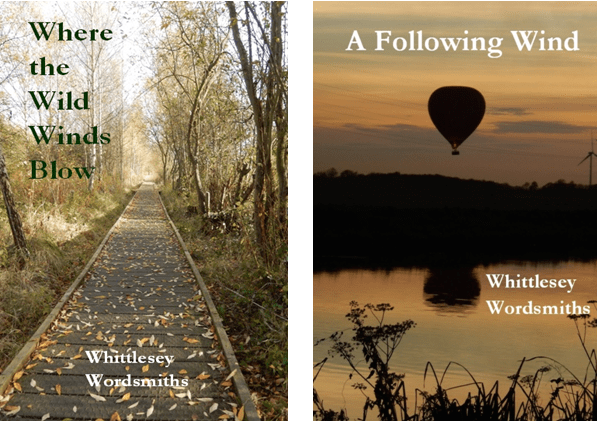
Where the Wild Winds Blow and A Following Wind,the first two collections.
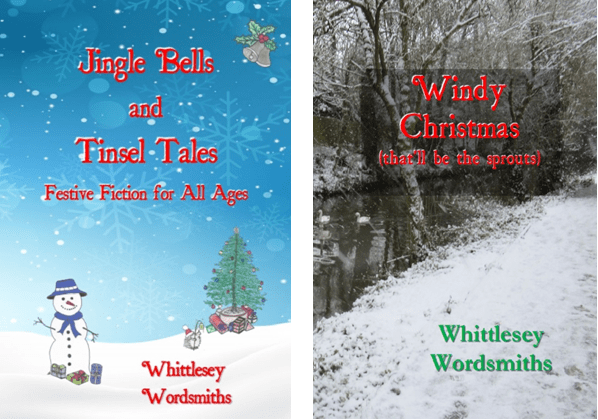
Jingle Bells and Tinsel Tales and Windy Christmas ( that’ll be the sprouts). Our Christmas collections
“Writing a book is a horrible, exhausting struggle, like a long bout with some painful illness. One would never undertake such a thing if one were not driven on by some demon whom one can neither resist nor understand.”––George Orwell
Over the last few years, I’ve had the privilege of interviewing some amazing authors. Each one different, but all equally fascinating. However, I always end my interviews with the same question, namely, what’s your advice to anyone thinking of writing a book or taking up writing? So, this month, I thought I’d take some of those fabulous responses and put them here, in one helpful, and hopefully inspiring article.
The only advice that is guaranteed to be correct is to pick up your pen and begin. Then you are a writer, whatever anyone says. ––Ross Greenwood
It’s a real cliché but read. Read in your genre and out of…
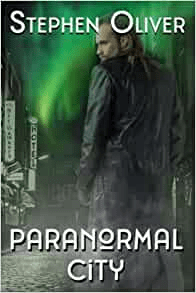
One of our writing group members, Stephen Oliver, has achieved publishing success with his new novel Paranormal City. It has been very well received and attracted 5 star reviews on Amazon:
“I survived the Dark City and found my way home. I bought this book from the author at a book signing. I was intrigued and when I started reading it was instantly drawn deeply into this strange world. His descriptions of the people inhabiting the dark city and descriptions of Hell are absolutely amazing, I thoroughly enjoyed every bit of this book. It appealed to my darker side. Congratulations Stephen Oliver, I look forward to the next one.”
Stephen Oliver is a prolific writer of short stories most of which occupy the Science Fiction and Fantasy genres.
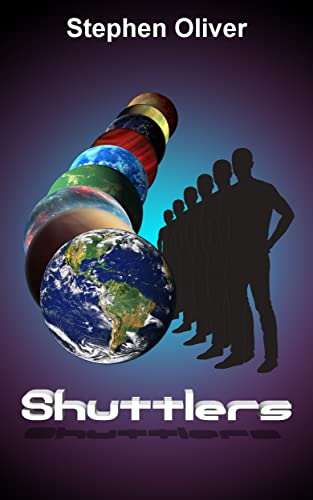
Shuttlers is his first full length novel. I was privileged to read it prior to publication and enjoyed it thoroughly. Stephen is the consummate story teller the book is imaginative, original and not to be missed.
After reading the manuscript as it was then, I gave him my order for the first paperback print copy. If you can’t wait for the print edition the ebook is available now on Kindle,
Trouble is brewing across the Multiverse, and Justin Wilson, a young inter-reality smuggler, is in the thick of it. Alternate versions of the Earth are being raided, plundered and even accidentally destroyed, by Shuttlers, beings like Justin who can slip between realities with ease.
The story begins when Justin is arrested for smuggling forbidden books from his world into another by Pol Atkinson. Pol is a patrolman of the Sidewise Directorate, the organisation set up to prevent further damage to all these defenceless worlds. Justin eventually decides to work together with Pol to avert a conspiracy from gaining control of all of Earth’s alternate realities everywhere.
Forget about reaching for the stars, which may be impossible, and explore the infinite variations of our own world, where anything can and will happen!
Before it all started
“Straight of limb, true of eye, steady and aglow.”
We have posted these two pieces before but they are timely just now, the first was written by Val Fish and is about the poem For the Fallen by Laurence Binyon. The second piece is a poem written by another of our brilliant Whittlesey Wordsmiths TessaThomson.
For the Fallen by Laurence Binyon
Inspiration for ‘For The Fallen’
Laurence Binyon composed his best known poem while sitting on the cliff-top looking out to sea from the dramatic scenery of the north Cornish coastline. A plaque marks the location at Pentire Point, north of Polzeath. However, there is also a small plaque on the East Cliff north of Portreath, further south on the same north Cornwall coast, which also claims to be the place where the poem was written.
The poem was written in mid September 1914, a few weeks after the outbreak of the First World War. During these weeks the British Expeditionary Force had suffered casualties following its first encounter with the Imperial German Army at the Battle of Mons on 23 August, its rearguard action during the retreat from Mons in late August and the Battle of Le Cateau on 26 August, and its participation with the French Army in holding up the Imperial German Army at the First Battle of the Marne between 5 and 9 September 1914.
Laurence said in 1939 that the four lines of the fourth stanza came to him first. These words of the fourth stanza have become especially familiar and famous, having been adopted by the Royal British Legion as an Exhortation for ceremonies of Remembrance to commemorate fallen Servicemen and women.
Laurence Binyon was too old to enlist in the military forces, but he went to work for the Red Cross as a medical orderly in 1916. He lost several close friends and his brother-in-law in the war.
For The Fallen
With proud thanksgiving, a mother for her children,
England mourns for her dead across the sea.
Flesh of her flesh they were, spirit of her spirit,
Fallen in the cause of the free.
Solemn the drums thrill; Death august and royal
Sings sorrow up into immortal spheres,
There is music in the midst of desolation
And a glory that shines upon our tears.
They went with songs to the battle, they were young,
Straight of limb, true of eye, steady and aglow.
They were staunch to the end against odds uncounted;
They fell with their faces to the foe.
They shall grow not old, as we that are left grow old:
Age shall not weary them, nor the years condemn.
At the going down of the sun and in the morning
We will remember them.
They mingle not with their laughing comrades again;
They sit no more at familiar tables of home;
They have no lot in our labour of the day-time;
They sleep beyond England’s foam.
But where our desires are and our hopes profound,
Felt as a well-spring that is hidden from sight,
To the innermost heart of their own land they are known
As the stars are known to the Night;
As the stars that shall be bright when we are dust,
Moving in marches upon the heavenly plain;
As the stars that are starry in the time of our darkness,
To the end, to the end, they remain.
Laurence Binyon 1869 – 1943
For the Fallen we will remember them.
Postscript
I was privileged to perform on the stage at The Broadway Peterborough in 2014, in the ‘Sing for Life’ ladies’ choir, to raise funds for a new wing at Sue Ryder’s Thorpe Hall Hospice.
On the 100th Anniversary of the beginning of the First World War, we sang an adaptation of ‘For The Fallen’ by Rowland Lee.
In the final few bars, we were as stunned as the audience as poppies came falling from above onto the stage. It was a moment I’ll always treasure.
Valerie Fish
Lest we Forget
Written by Tessa Thomson
With the annual remembrance commemorations drawing near, Tessa has marked this time of reflection with a poem expressing not only her thoughts but those of most of us.
LEST WE FORGET – NOVEMBER 11TH
We travel in our hordes to see that place
Wherein our loved ones fell without a trace.
Marked and blanketed by stones in white
Covering that great plain, that great site.
Farm hand boys and factory workers
Friends from villages, schools or clubs.
Joined together, left their homeland
To lie in fields, decayed amongst the scrub.
Their voices call out still across that plain
Feet are still heard thundering, inches gained.
Hearts were in their mouths, panting fast
As struggling, reached their enemies at last.
The bodies lay before them in the mud
Mingled with the dirt, the crimson blood.
No time to mourn a brother or a friend
Just pass them by, praying for the end.
Guns that deafened now are stilled
Armies of boys and men were killed.
Some now just memories to their kin
Some carried pain through life like sin
They gave us freedom, free to speak
They made us strong not kept us weak
We live in peace and fear no man
They gave their lives so we just can
Tessa Thomson
At the going down of the sun and in the morning we will remember them
We can only have spring after winter the sun can only rise after it has gone down.
If you’re after something different from the ‘run of the mill’ crime thriller , this is the book for you. Set around Cambridge and the Fens, we are introduced to D.C.I. Cyril Lane, affectionately known as Arnold, a likable quirky character , who surprised me nearing the end by showing a lovely sensitive side. A mixture of science, history and time travel, an interesting and entertaining read. I do hope this isn’t the last we hear of Arnold, this is crying out for a sequel.
If you live in Whittlesey this book is available at Parker’s Newsagents.
Out in the fens we pay little heed to the passing of the seasons and for us older residents we have some difficulty even with the passing of the days. Knowing where we are in the week is a task often fraught with difficulty, a calendar is a useful tool.
Early in the new year before Father Christmas had settled down for a good sleep. Whittlesey Wordsmiths resumed work on two Christmas collections.
Jingle Bells and Tinsel Tales for younger readers or listeners and Windy Christmas for the grown-ups.
The books are authored by the talented bunch of writers known as Whittlesey Wordsmiths.
The children’s book is illustrated by Jane Pobgee, both books were edited by our resident wizardess Cathy Cade.
The covers are a joint effort with contributions from Stephen Oliver, Cathy Cade, Val Chapman, Jane Pobgee, Wendy Fletcher and Philip Cumberland
The covers are complete and these excellent books should be rolling off the presses within the next few weeks.
The Vicar from A Sexagenarian from Smithy Fendrawn by Jane Pobgee
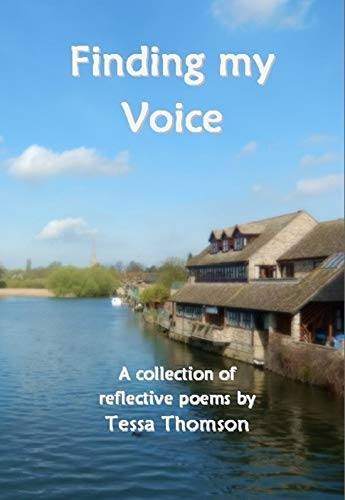
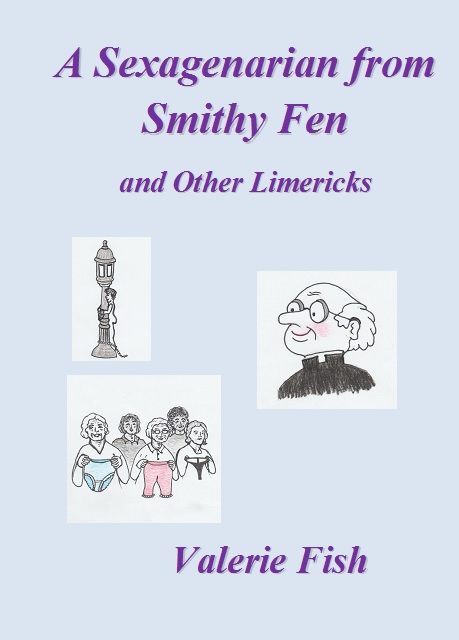
Whittlesey Wordsmiths are having a very productive year, two individual members, Tessa Thomson and Valerie Fish have published their own books. Tessa’s book is of poetry and Valerie’s a collection of limericks. Stephen Oliver has had a number of his short stories accepted for publication, nine at the last count. The Wordsmiths are in the process of completing their two Christmas collections carefully gathered together by Cathy Cade. Cathy is not only an ace editor and proof reader but also a prolific writer too, having published three of her own books. She has had great competition success with her short stories and poetry.Whittlesey Wordsmiths have also benefitted from the artistic talent of Jane Pobgee, not only for illustrations in our upcoming collection of children’s Christmas stories but also in Valerie’s and Tessa’s books.
Finding my Voice by Tessa Thomson
A Sexagenarian from Smithy Fen
These are a few of Jane’s drawings.
Santa’s House from Tessa’s book
Rough Sleeper from Tessa’s Book
Naughty vicar from Valeries book
Incy Wincy from Val’s book.
Jane’s drawings have a beautiful simplicity and capture the essence of the poem, limerick or story they accompany perfectly.
Here is just one, from the upcoming children’s Christmas stories.
This is the Naughty Fairy, from Jan Cunningham’s story by the same name
This is chapter five, the concluding chapter in the second outstanding Round Robin story from Whittlesey Wordsmiths. Its authors are Gwen Bunting, Val Chapman, Wendy Fletcher and Jane Pobgee. Enjoy.
Chapter 5
As much as she longed to show the letter to Stan’s Ma, she resisted. It would complicate matters. Who was she going to speak to regarding this accusation?
Life continued at the office. No one suspected anything different in the relationship between Ada and Mr. Giles. It was natural to keep it quiet until they had got to know each other better.
During the second week after Ada was given Stan’s letter she received a letter from the Ministry of Defence. Could this be confirmation that Stan had really died? She opened it cautiously, not wanting to learn that Stan’s body had been identified. It read:
‘Dear Mrs. Coleman,
‘I understand that you have recently acquired a letter from your husband, Lance/cpl 2500673 Stanley Coleman. We would like to interview you and ascertain that this letter is genuine.
‘Come to the Dry Cleaners on Drake Street, bringing with you a coat you would like dry cleaned, and ask to see the manager.
‘It is vital you come to the shop on Saturday 18th at twelve-thirty. Please keep this information to yourself.
‘Yours sincerely,
‘Col. A. G. Marshland.’
Ada sat down suddenly, shocked by what she was reading. She made herself tea and re-read the Ministry letter. She must go for the appointment, but why a Dry Cleaners shop?
She felt very weary and went to bed early, which did not bring sleep. She kept going over in her mind all the intrigue from the Colonel’s letter.
Finally rising from her bed after such a fractious night, Ada once again read both letters. It was hard to believe that after two years she would have what should have been Stan’s last letter. She was sure it was from Stan, as he made a remark in his letter that only Ada would understand. It was a little secret code they had derived. She readied herself for work and left the precious letters safely at home.
She arrived quite early. Not many of the typing pool staff were there; only Phyllis.
‘My word, Ada, you look rough. Bad night?’
“Ye…yes.” She stuttered. “I think I have a cold coming.”
“Here, gal, have a Beechams. That will make you feel better.” She handed Phyllis a packet of powder.
“Thanks, Phyll; kind of you. Will take it into the canteen for a glass of water,” replied Ada, discreetly dropping the powder in her handbag.
Back at her seat in the typing pool she started to look into her folder that contained her day’s work. Suddenly Mr. Giles called her into his office. Picking up her shorthand book and pencil she headed to his office.
‘Ada, how are you getting on since you received the letter from Stan? You seem very quiet.’
‘I am fine, Mr. Giles, thank you. Just a cold starting, I fear. Have taken something for it. Will try not to pass the germs on,’ she ended.
She was not going to enlighten anyone about her forthcoming meeting.
‘Well, if you are sure you are all right… I feel guilty for giving you the letter but felt now I had found you it was most important that the letter reached you,’ Arthur concluded.
“Is that all you require at the moment Mr. Giles?” Ada enquired.
“Yes, thank you Mrs. Coleman.” With that he turned to answer the ringing telephone.
Ada left the office a little uncertain as to whether Arthur Giles had read Stan’s letter before he had found Ada. After all, to have something in your possession for two years might make you wonder what was in it, considering his involvement with the other side.
Saturday came, and Ada found an appropriate coat for dry cleaning. It was a luxury she rarely afforded herself, but that was her instruction. Walking into the shop, the bell over the door clanged to announce a customer. A lady appeared from the back room.
‘Good afternoon, may I help you?’
‘I have an appointment with your manager. I am Mrs. Coleman.’
‘Is that coat for dry cleaning?’ enquired the lady.
‘Oh, yes. Yes, it is.”
‘I will take it. Would you like to walk through and I will show you the manager’s office,’ the woman lifted the counter flap.
Ada followed as instructed. It all seemed so natural: the woman leading the way and knocking on a door. A deep voice called, ‘Come in.’
Ada proceeded to enter to be confronted by a tall gentleman, older than she had expected.
‘Good afternoon Mrs. Coleman. I am Colonel Marshland. I wrote to you.’
‘Ye-yes.’ Ada’s nervousness took over again.
‘Please sit down, Mrs. Coleman and I will explain why I wanted to see you.’
The Colonel explained further.
Yes, Stan was alive but at present Ada would not be allowed to see him. Stan’s work had just one more phase to go through then his duty to King and Country would be done for good.
Ada was overwhelmed by the knowledge that her Stan was alive and one day very soon they would meet up. She really must concentrate on what the Colonel was asking her to do. A knock on the door heralded the lady with a tray of tea and biscuits. The interlude was welcome as Ada’s head was whirling.
Again, she was told not to repeat this conversation to anyone. Stan’s life depended on his ‘missing in action’ cover.
She tried to explain to the Colonel about Stan’s mother. He was sympathetic but insisted that she told no one. He would be in touch with her by letter when it was safe.
Ada thanked him and promised she would keep everything to herself. It would be hard for her, though, not telling Stan’s ma the good news.
Ada made a point of visiting Stan’s ma at the weekends; these were lonely times for widows. Leaving the Dry Cleaners shop with a receipt for her coat, she made her way to see her, but there was a crowd of neighbours outside the terraced house.
‘What’s happened, is Ma alright?’ Ada asked. A neighbour Ada recognised appeared from inside the house, beckoning her in. There on the floor lay dear Ma Coleman clutching Stan’s photograph. The glass had been broken as Ma fell, suffering a heart attack and dying instantly.
Ada was heartbroken; Ma had been a mother figure to her since her own parents died in a direct hit on her home while Ada was in an Air Raid Shelter. The air raid had begun as she came home from work. Now she did not have to worry about not sharing her news. Ma was dead.
The funeral went ahead, and Ada once again had the job of house clearing. At least this time it was not bomb damaged like her own parents’ home. Ada kept a few little items that she knew Stan may want to keep. The rest was left for the new tenants. Many people had lost everything in the raids.
Four weeks later, Ada was typing with the rest of the girls, when several policemen burst into the office asking where they could find Mr. Giles. Shocked and alarmed, they pointed to the office where Mr. Giles had jumped up in surprise. The moment had come; he had been found.
‘Are you Arthur Giles of Bonifield Road?’ asked the senior officer. ‘We are arresting you in accordance with the official Secrets Act.’
Arthur started to protest, but the officers handcuffed him and he was bundled out of the office. He cast a pleading glance to Ada for help. She ignored it and turned away.
Some weeks later Ada and Stan were reunited in a quiet Yorkshire hotel. This was to be the beginning of a new life for them both, getting to know each other again. Seven years had elapsed since they were married. It would be difficult at times, but they hoped they would succeed. They did not return to their little home but were rehoused in another district where they were unknown.
In view of the work Stan had undertaken, it was suggested that they may wish to resettle far away in New Zealand with new identities so that their previous lives were untraceable. They both agreed it would be a great start for their forthcoming family.












 Whittlesey Wordsmiths