Is a woman’s place still in the home? By Rita Skeats

Photo by Ketut Subiyanto on Pexels.com

This is Rita’s blog post, a well argued point of view.

Is a woman’s place still in the home?

I took a special interest in a debate on the subject of: A women’s place is in the home, in high school in the 1970s.  And fifty years or so later, I believe that little has changed for women.

Our class tutor, Father Chira, was inspirational and sparked our imagination by encouraging regular debates on contentious subjects.  He was an extraordinary personality, being a Catholic priest from Ceylon (now Shri Lanka) who travelled worldwide to teach in third world countries.  He encouraged us to question, challenge, debate, be analytical and negotiate – behaviours that were controversial for women in my little backwater country, Guyana, where women knew that their place was at home and men went out to work and have fun.

This particular debating session on ‘Women’s place is in the home’ stuck in my mind because I held strong opinions on the subject and infuriated the boys of my class with my arguments against.  The girls of my class won the debate and the boys walked out in protest.

“That Budhram girl is trouble.  She cheats by reading books on the subject and her ideas contradict our culture,” they hissed in chorus and glowered at me as they walked out.

Father Chira saved the day in his cheery tones, “Young lady, you will be an advocate for others,” and we ignored the

boys.  They returned to the classroom shortly, sulkily muttering apologies.

The boys argued that women’s brains were smaller, and therefore, they were less intelligent and they were physically weaker than men.  This excluded them from work involving a high level of intelligence and strength and traditionally they stayed at home doing the house work and the caring.

Some of the girls were hoodwinked into believing the boys’ arguments.  But where was the evidence that women were less intelligent, I questioned.  No evidence was presented and I put forward the cases of Indira Ghandi, Queen Elizabeth, Goldameir, Madame Curie, very influential and intelligent women – to name a few.  Yes, women were physically weaker but technological advances made it possible for women to take on jobs that were predominantly done by men in the past.
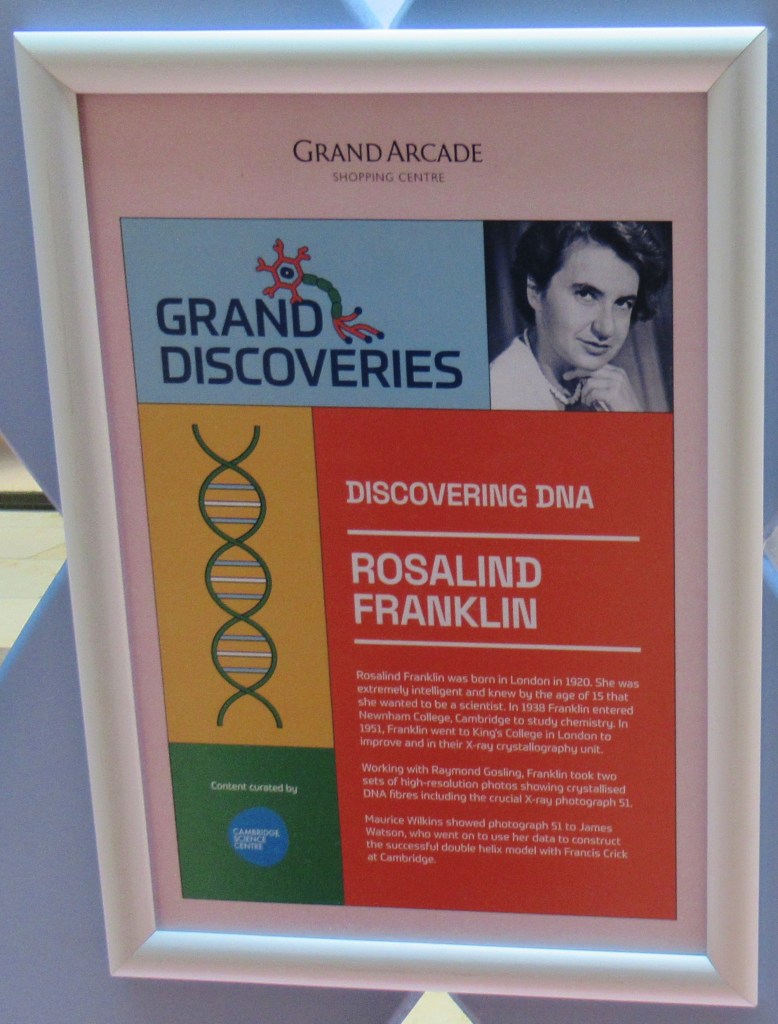
Rosalind Franklin a woman with a larger brain?

During the War years, women proved that they were more than capable to do men’s work by doubling their duties as breadwinners (taking on men’s work) and caring for the family.  However, after the War, the WHO commissioned John Bowlby (psychologist) to do studies (Childcare and the Growth of Love, 1953) on how children could be affected by maternal deprivation.  He concluded that a mother’s place was at home caring for children.  That was a blow for women’s liberation from the kitchen sink and the government used it as an excuse for giving the jobs back to the returning soldiers. Bowlby’s studies were later found to be flawed.

When I was growing up in the 1960s and 70s, Guyana was rooted in patriarchal norms and tradition, and misogyny and sexism flourished.  I didn’t think it was a fair society for women.  My mother’s work was never finished – with ten children and an absent-minded husband, she never had a break.  My father, on the other hand, had the opportunity to do as he liked.  It was a man’s world.  I thought that I was leaving behind a primitive society when I came to the UK to do nurse training in the 1970s.

I was wrong to believe that the UK was an egalitarian society at that time.  Gender imbalance was alive and thriving in British households. Many working women were in part-time low-paid jobs – flexible to accommodate family needs. In the midst of an imbalance society, sexism, misogyny, sexual discrimination, and other abuses flourish. Male nurse, Ian, was lazy and lascivious and he boasted that he was earning a third more than us (female nurses of the same grade).  “Come to the cinema with me, Rita.  I’ll pay for you,” he sneeringly condescended.  “Shame on you!  You are a married man,” I declined in disgust. “It’s OK for me to do whatever I want because I am a man,” he boasted with a permanent smirk on his ugly face.  Dr Mandel was no better. “Come to my room, I will cook you sicken (chicken) curry” was his chatline  for finding a date among the young trainee nurses.  We would ignore him and run away because he had wandering hands.  Lurking in the background was his wife and several children. Sexual predatory behaviour was normalised at that time and the media fuelled it further by churning out films, books, TV plays, etc that showed women in submissive and subservient roles in society.

I thought I might find equal partnership in marriage but convention dictated otherwise.  I was left chained to the kitchen sink with two screaming toddlers while my husband enjoyed a bachelor’s lifestyle. “You cannot stop him from going to the pub and meeting up with his mates.  That’s how we do things here in the East End,” the mother-in-law rebuked when I tried to get some sympathy.  My dreams of equal partnership were dashed.  All around me women were juggling childcare, housework and flexible part-time work for ‘pin money’ while their menfolk seemed oblivious of their plights.

Several decades after my debate at school, little has changed for women.  Although more women were employed in paid work than before, they continued to do the lion’s share of childcare and housework.  I believed that life is more stressful for women than it was in the 1970s because they they took on the breadwinner role (Both husband and wife are expected to be in paid work in order to survive in this modern society) as well as childcare and housework.  I have seen the struggles of my younger midwife colleagues juggling childcare, housework and a career that is not flexible to accommodate their family needs.

Recently progress in gender gap has slowed down or stalled due to the pandemic and poor economic growth.  Progress may require increases in men’s participation in household and care work, governmental provision of childcare and employer’s policies that reduce gender discrimination and help man and women combine jobs with family care responsibilities.  Fifty years hence, women’s place is still in the home and also in the workplace as breadwinners.
The Mother I Never Knew

We are a diverse group of writers shaped by our experiences, this is another autobiographical piece from one of our U3A writing group members. Tessa writes about her mother, the mother she never had a chance to know.

Tessa's Mum
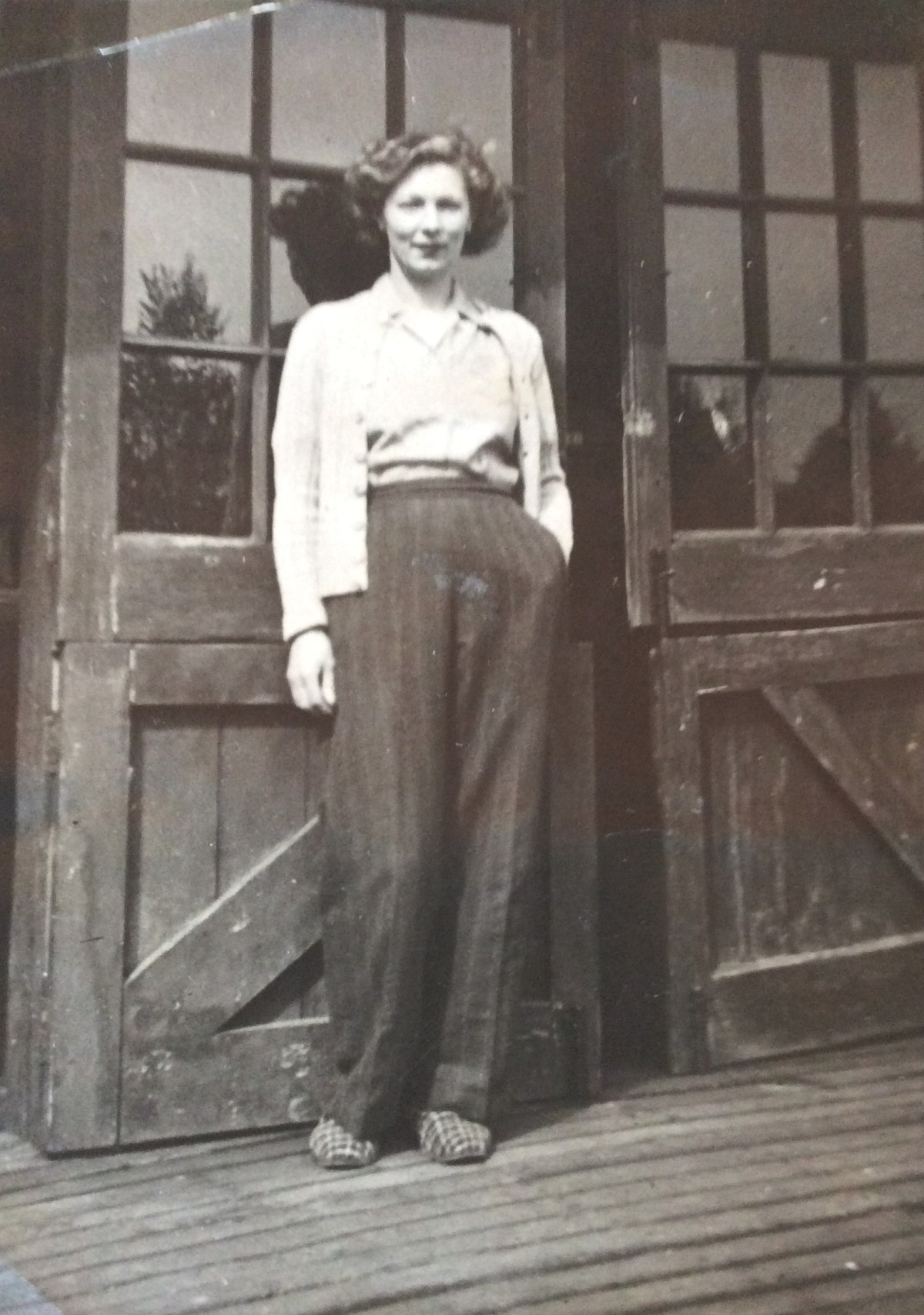
Tessa’s mother

My mother died at the age of 31. She had been a young bride, an abused wife, a mother of four, a WAAF, a lover of some, a prisoner, and at the end, a consumptive. I never knew my mother; I was three and a half when she died but her life had an enormous impact on her four surviving children. The consequences for us all were huge. The expression most used about my mother when I was growing up was “spirited”.


My mother was born on October 6th 1917 in Limerick, southern Ireland. She was christened Teresa although when it suited her she could and did, change her name. She was the eldest child of six children. A seventh child died in infancy. My grandfather was with the Royal Engineers based in Ireland at the time of my mother’s birth. My grandmother helped her mother at a guest house near the camp. My grandparents had a long and happy marriage mainly because my grandfather agreed on everything with my grandmother. There was one exception to this however, my mother. Despite her many failings, and indiscretions, my mother was without doubt my grandfather’s favourite child, something that would be tested many times.


My mother enjoyed the freedom of the large encampment and in particular the dances. She loved the dances. Actually my grandfather forbade her to go to them and her younger sister was supposed to ensure she was at home on the dance nights. But my mother always managed to sneak out and stand by the door of the dance hall. She was rarely caught and frequently managed a dance.


My mother and the family moved to England and to Welwyn Garden City sometime around 1932. She would have been about 15. In 1938 aged just twenty, and three months pregnant she married. She gave birth that year to twin girls. I cannot say if this was an unhappy marriage from the start. I do know from things I have learned as an adult that her husband was a violent man whose drinking would frequently result in abuse, both verbal and physical towards my mother. In 1940 she gave birth to a boy. With her husband away in the army I think my mother; young as she was must have found life very tough and lonely. She must have yearned for the freedom her sisters enjoyed, as they were yet to marry.


That freedom came with the soldiers on leave, looking for relief from the fighting. In Welwyn Garden City at that time was a large pub with an even larger ballroom. Dances were held several times a week. My mother would frequently leave the children in their cots, with glass bottle feeders and a roaring fire in the grate, and go dancing. It was reckless but it’s hard for me to condemn her. I have some sympathy for a young woman in uncertain times wanting to have some fun. It was usually left to my grandmother to respond when the neighbours heard the children crying in the house.


Sometime in 1942 my mother left her three children in the care of her husband’s sister and joined the WAAF band as a girl drummer based in Chivenham in Devon.  How she was able to do this, with a family left at home I don’t know but I imagine during war time anything is possible. My mother’s life must have changed dramatically. She was in uniform; she had many friends, though most seemed to be men. She came home on leave with stories of the great time she was having. My grandmother kept in touch with the children but at some point, and I am unclear as to when, my mother’s husband placed the twins in to an orphanage, and the boy he gave to friends who later adopted him. During this time my mother changed her forename and linked it with her married surname, gave her status as single and dropped her age by five years. She had a number of affairs judging by the number of young Americans in particular, who came to my grandmother’s house asking for her.


In July 1944 at The Parish church of Emmanuel, Compton Gifford near Plymouth she married a 22 year old Leading Airman in the RAF.  He was one of triplets, and was known to my family. Of course my mother was still married. On the front page of the Western Evening Herald dated Monday July 24th is a picture of the happy couple with a guard of honour of airmen and women. Had my mother lost her mind? The wedding certificate states that she was a spinster, aged 22 and single. She had to alter her father’s name to bring it in line with her own and gave his employment as a Company Sergeant Major in the Royal Corps of Signals. I’m sure my grandfather would have been tickled pink by that.


Whatever happiness she may have felt at this time, was soon dispelled. Her real husband was told of the marriage and informed the police. On leave, and visiting home she realised the game was up and went on the run. She appears to have been AWOL for at least 8 or 9 months during which time she must have had a relationship with someone as I was born in December 1945.  Whether my mother gave herself up or was caught I don’t know. Where she was during that time is also unknown. But at sometime during the summer of 1945 she faced trial for bigamy at the Old Bailey. My grandparents both attended the trial which, with the journey alone must have been quite a trial for them as well. She was sentenced to nine months imprisonment deferred until after I was born. By the beginning of January 1946 my mother’s sentence began at Holloway Prison. My mother never saw me again.


She left prison sometime in late 1946. I’m not sure exactly when or whether she had time off for good behaviour. But whilst in prison she contracted tuberculosis. Meanwhile I was in hospital suffering from septicaemia. Because of my mother’s illness I had an extended stay in hospital and didn’t leave until she died in May 1949.


The twins stayed in an orphanage until they were 16. Their lives were severely blighted by that experience and neither of them lived happily. The boy was adopted by people who were unkind and at times cruel. I met him for the first time a few years ago and we keep in touch. As for me, well my life has had many tragic moments and times I would rather forget. Most of my childhood is blocked from my memory, and that which I can remember I would rather not. As to my father, who knows? My mother did of course and asked my grandmother if she wanted to know. But she said no.

Tessa Thomson


USUAL MUTTWITS

DOG TAILS by ZoZo and Jools

Discover WordPress

A daily selection of the best content published on WordPress, collected for you by humans who love to read.

The Daily Post

The Art and Craft of Blogging

WordPress.com News

The latest news on WordPress.com and the WordPress community.