Marsha Ingrao Story Chat

Three of our Whittlesey Wordsmiths, Cathy Cade, Wendy Fletcher and Philip Cumberland have had their short stories featured in this book. The stories were first featured on Marsha’s blog.

Fiction relaxes and stimulates intelligent, busy people, as social media and games can’t. A  professional commuting to work or waiting for the next meeting is too busy to read a long novel, but they might be looking for the next book for an after-hour reading.

Each story in the new book, Story Chat: Online Literary Conversations: Series of Short Stories and Ruminations, takes three to five minutes to read, making it the perfect book for well-educated readers who love reading fiction in short spurts. Some of the authors are just getting their literary feet wet, but many of the Story Chat authors already have published longer novels.

“Daily, we miss out on a valuable 24 minutes waiting on other people.” Patricia Murphy Irish Independent.

Everyone browses on their phone, but according to one life coach, reading is an effective way to use those minutes. Bookstores at airports, near subways, and offices where people wait carry a myriad of reading choices. Why should an intelligent reader choose Story Chat: Online Literary Conversations over a magazine or a novel?

My colleague Carmen called her quick fiction “mind candy.” Her “mind candy” came out during breaks between presentations, when she traveled, or when she needed to rest her brain.

Anthologies like this one introduce book consumers like Carmen to many authors quickly. Each story entertains yet has a deeper vein for the perceptive reader. At the end of each story are three or four quotes from previous online readers.

Online readers had this to say about Story Chat: Online Literary Conversations.

  • “I loved not only reading brand-new stories, but the interaction between readers was also great.”
  • “There was an excellent mixture of genres.”
  • “The balance is perfect. There is a good mixture of male and female writers from all over the world.

Story Chat stories were first published on AlwaysWrite.blog. They covered working and retired adults’ topics like dealing with dementia, bullying, nursing home care, social services, PSTD, surviving as an x-con, changing jobs, single parenting, and finding romance. Most of the stories have surprise or open endings. Some stories are realistic, while others mix in paranormal.

The first readers of these stories online were writers, social workers, librarians, lawyers, psychologists, professors, and teachers who each wrote an in-depth analysis of each short story in the comment section. The author and readers bantered back and forth online like they were sitting together in a book club host’s living room, enjoying their favorite beverage and snack. Each author left with new knowledge and a Mona Lisa smile.
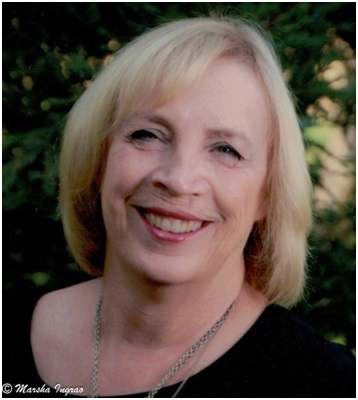
Marsha Ingrao

Story Chat: Online Literary Conversations: a Series of Short Stories and Ruminations is Marsha Ingrao’s first experience as a contributing editor. Previous works include a chapter in This Is How We Grow (2023) by Yvette Prior, Images of America: Woodlake, published by Arcadia Publishing (August 13, 2015), available on Amazon. She has had a blog since 2012 with over 1,600 posts. In addition, Ingrao has had numerous poems and articles published during her twenty-five-year career as a teacher and educational consultant.

Contact:

Marsha Ingrao

Contributing Editor

Always Write

559-303-9241

alwayswrite01@gmail.com or tchistorygal@gmail.com

https://alwayswrite.blog

# # #

Jane’s pictures

The Vicar from A Sexagenarian from Smithy Fen drawn by Jane Pobgee

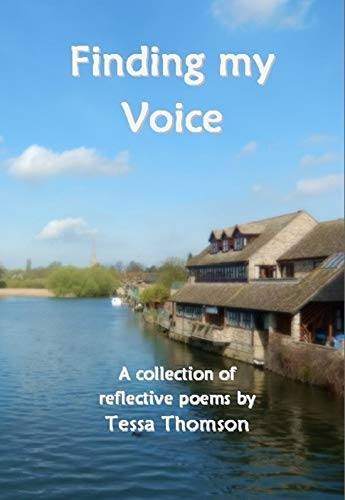
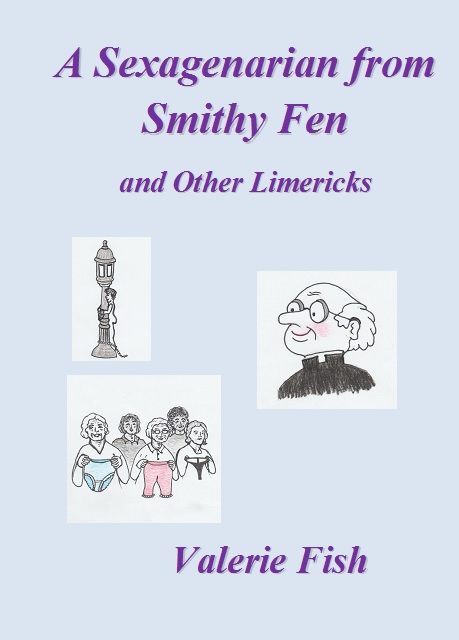
Whittlesey Wordsmiths are having a very productive year, two individual members, Tessa Thomson and Valerie Fish have published their own books. Tessa’s book is of poetry and Valerie’s a collection of limericks. Stephen Oliver has had a number of his short stories accepted for publication, nine at the last count. The Wordsmiths are in the process of completing their two Christmas collections carefully gathered together by Cathy Cade. Cathy is not only an ace editor and proof reader but also a prolific writer too, having published three of her own books. She has had great competition success with her short stories and poetry.Whittlesey Wordsmiths have also benefitted from the artistic talent of Jane Pobgee, not only for illustrations in our upcoming collection of children’s Christmas stories but also in Valerie’s and Tessa’s books.

Finding my Voice by Tessa Thomson
A Sexagenarian from Smithy Fen

These are a few of Jane’s drawings.

Santa’s House from Tessa’s book
Rough Sleeper from Tessa’s Book
Naughty vicar from Valeries book
Incy Wincy from Val’s book.

Jane’s drawings have a beautiful simplicity and capture the essence of the poem, limerick or story they accompany perfectly.

Here is just one, from the upcoming children’s Christmas stories.

This is the Naughty Fairy, from Jan Cunningham’s story by the same name

Summer, the sun screens and writing

We have two posts on this subject:

Cathy wrote about screens and sunshine Wendy followed up with her thoughts on the same subject.

Off-Screen Editing

I’ve read advice never to start a story by describing the weather, but it’s what I notice first when I get up. Perhaps it’s because of where I live, in the UK: we can’t rely on the sun waiting around till we’re free to enjoy it. Before retirement I mourned for every sunny day when I had to work. The weather was certain to deteriorate for the weekends.

Retired, I have the freedom to spend every sunny day outside, but my laptop isn’t garden-friendly.

It’s the screen that won’t co-operate. Sitting in shade, adjusting screen brightness, giving the cursor a trail and making it bigger… nothing makes computing alfresco easy. My solution this year has been to edit off-screen. There are advantages to taking my red pen outside.

Most notably, I’ve taken more time over it, in order to spend as long as possible in the fresh air without feeling guilty. I’m not rushing through the final scenes because I’m fed up with editing this story for the fourth (fifth, sixth, seventh…) time.

I print on single-sided scrap to save trees, and manage with single spaced printouts, but to save even more paper, you can send your work to your Kindle, if you have one, by emailing the file to your Kindle email address with convert as your email title. It is possible to make editing notes on your Kindle version, but I still prefer editing onto paper.

Nevertheless, reading from the Kindle seems to throw up different errors compared to reading from a printout, or a word processor. I also read aloud sometimes, if there’s no-one within hearing range, to listen how the writing sounds. (When reading my story to the writing group, I’ve found that making notes on the fly tends to interrupt

the flow.)

Typing up my hard-copy edits only seems like half a job – the thinking’s already been done. Sometimes I’ll change my mind again and revert to the original, but that happens anyway, and it’s quicker when ‘reverting’ means ‘not changing’.

I plan to continue the off-screen edits when the sun finally flies south for the winter.


How do other writers cope with the lure of the sun in the few weeks Britain calls summer?

Cathy Cade.

Summer and Technology

The incompatibility of summer and technology is an ongoing issue for all us would-be authors.

My solution is to be creative with my pen and paper at this time of year and save the typing for dark, winter nights.

I can wander along the beach, feet cooled by the surf, a notebook in my rucksack. There is always a handy rock where I can sit for a few minutes to jot down odd words that spring to mind or dally for longer if inspiration takes hold.

Come winter, I can stoke up the fire, huddle over the lap top and type from the notes, with the added advantage that I see it all now with fresh eyes. The ideas have had time to mature, making revision much less challenging and the whole experience more rewarding.

Wendy Fletcher

Preparation and tweaking

Whittlesey Buttercross
The Whittlesey Buttercross

Our book Where the Wild Winds Blow is in the garage having its final bit of tweaking. It is jacked up off the ground. Cathy and Wendy are wandering about underneath, attractively attired in nice white overalls with lead lights in their hands. Cathy pokes out rogue commas and semicolons with a very large screwdriver. Whilst Wendy has a big spanner in her hand tightening up any loose phrases or sentences dangling underneath. Very soon we will have the sleek new cover fitted and be ready for the off.

Stephen Oliver is making progress with his novel and anthologies, Stuart Roberts with his next book. Cathy Cade, Val Chapman and Val Fish have contributed to the 81 word challenge, I suspect other members have too but don’t know yet. Going on past form Val Fish has probably got entries in the limerick competition.

The Whittlesey Word Forge is ringing with the sound of writing being hammered into shape.

USUAL MUTTWITS

DOG TAILS by ZoZo and Jools

Discover WordPress

A daily selection of the best content published on WordPress, collected for you by humans who love to read.

The Daily Post

The Art and Craft of Blogging

WordPress.com News

The latest news on WordPress.com and the WordPress community.