I’m not sure how many things you are allowed to dump in Room 101, I’m afraid my list is rather long. Is that a sign of old age, am I really a grumpy, Granny ? I’m sure my grandson would have something to say on the subject. And although we do seem to go on about the youth of today, my gripes are not aimed at any one generation, I personally think us oldies can be just as bad…
With Halloween fast approaching the Whittlesey Wordsmiths offer you this timely story from Henry:
Emily’s Story by Henry Curry
I approached the house with some trepidation. In the distance, the Gothic arches and dark windows lent an air of gloom about the place that only made my depression worse. Shadows were already deepening as I reached the forbidding gates and a bell tolled in the distance, as if warning me away. But I knew I had to go forward, go into that place. I gripped the letter.
Emily had been insistent; her words came to me again and again. She had sounded so firm and final the last time we had met. We were friends, no more than friends. She made that clear. As I kissed her on the cheek and turned to leave I saw her smile, but there was no happiness about her countenance. No, there was something else. I had wanted to say so much, reveal my feelings for her. My true feelings. But she had seemed so resolute, and my courage had left me. Now, an unhappy year had passed.
I paused. A breeze shook the trees, dragging the last few leaves away to their autumnal rest. The letter seemed to weigh so heavily. I longed to stop and read it again, to ponder each word, looking behind each phrase for another meaning. But instead, I resolved to continue. My footsteps made the gravel crunch generously, a sound which had the effect of raising my spirits a little. I stepped forward, even strode, along that long drive; I even began to whistle a tune, one that Emily used to sing, my pace in time with the music, holding my emotions back, concentrating on walking, walking. Then the house was in front of me and I was at the great front door. I tugged sharply on the bell-pull, but heard no sound. A crow called mournfully as it rowed its way across the sky, its outstretched wing-tips like fingers against the twilight. I was about to try again when there was the sound of a bolt being drawn, and the door slowly opened.
‘You are expected. Follow me, sir.’ The servant had a faded air about him, as if he had been too long in a dust-filled room. His skin was as pale as the stone of the building, and he shuffled with a peculiar gait suggestive of some illness.
‘Thank you.’ I followed him into the warm hallway and immediately began to cough, I assumed as a result of the stale, stagnant air. Light seemed to penetrate but feebly, as if an unwelcome guest, hiding from all but the middle of the floor. As my eyes became accustomed to the faint gleam from the candle borne by my guide I became aware of a number of doors and a large staircase disappearing into the reddening gloom.
‘The lady will see you in here sir.’ I was shown into a room which I thought was the study, or perhaps the library. It was hard to discern the purpose of this room due to the darkness. I could see a grand desk commanding the middle, with a large high-backed chair of very old design, I fancied, given the detailed carving on its back. In the wavering shadows I could just make out tapestries on my left, and to the right a wall of what appeared to be bookshelves. At this point the ageing servant turned to leave, and as he did so he lit candles in each of the sconces by a great mantelpiece. The light now picked out a fine long case clock to one side of the fireplace. I resolved to examine the timepiece as far as I could, but as I moved towards it, someone else entered the room.
‘Hello Jeremy.’ It was Emily, my Emily. But it was not her. The voice I heard was harsh and broken, as if emanating from a dying volcano. I turned in happy expectations, but drew back sharply at the face before me. Her eyes!
‘Emily.’ My voice came in a hoarse croaking sound. I held out the letter. My words failed me. She stared blankly and spoke mechanically, in a distant way.
‘I knew you’d come. But many things have changed. I… I am to be married.’ The red-rimmed eyes held my gaze. There was no pleasure in her voice, only a sense of resignation. ‘You should not have come here. Please go now.’ I was shocked, but tried to remain calm, measured.
‘You seem unhappy Emily. Can’t we talk further? As friends? I can’t leave you this way, having come so far.’ I hoped she understood that I meant so much more than just my journey.
‘Then stay at the Inn tonight if you wish. Come again tomorrow, in the morning, in the daylight.’ With these words she turned and walked away before I could speak.
I spent an unhappy night at the old Inn in the town. Restful sleep would not come to me. In my dreams I saw only vague shapes and a shadowy figure with glaring red eyes drifting through a vast library. The books were falling towards me, and there was a smell that made me choke – I was trying to speak but no sound would emanate from my throat, and the figure crackled with an eerie laughter. Another figure seemed to be present, but I couldn’t see who it was. I felt hot, fearful, in a wild panic, but I didn’t know why.
I woke early but felt both disturbed and tired, being unrefreshed by my troubled sleep. Washing and dressing, I saw my face in the mirror – I was distressed at how old I appeared. I resolved to make light of the last night, to enjoy a good breakfast and a brisk walk back to the house. I didn’t want Emily to see me looking as haggard as I felt.
There seemed to be a thick morning fog settled over the valley, so my view of the house was temporarily obscured. As I turned onto the drive a vague outline of the old walls gradually materialised. But then my heart raced – something was wrong, very wrong! I quickened my pace, breaking into a trot, then a full blown run. Smoke was lazily drifting up from the broken walls and crumbling ruin – a great conflagration must have taken the house! There was no roof, only charred walls and beams. Without realising, I had started shouting as I ran. I was shouting, shouting, calling Emily’s name over and over.
‘Terrible. A terrible tragedy.’ A bewhiskered man in a tweed jacket was looking up at the building and calling a cocker spaniel back to him. ‘Here, Jack, here boy!’ I roughly grabbed this chap by the coat lapels, shouting at him.
‘Where is she? What happened to Emily? Is she safe?’ He pulled back, placing his hands on my shoulders.
‘Now then, now then. Calm yourself. I’m sure all that could be done was done, young fellow.’ The dog returned with a piece of paper in its mouth. ‘The blaze just took hold very quickly, very quickly. Started in the library, by all accounts. It was burning for three days.’ These last words seemed bizarre, barely registering.
‘But what happened to the people – to the lady, Emily? Where are they?’ Blood was bursting up my neck and into my head, pounding into my ears. ‘Where are they?’
‘Ah, now, you obviously knew the incumbents; well’ he looked wearily at me,’sadly no-one survived. They found the three souls yesterday, but all had perished. The lady, her husband-to-be, and the servant. All gone.’ He gave a wistful look up at the ruins. ‘I am so very sorry.’
‘But… but I was here yesterday. Yesterday evening. I saw them. I spoke to them. I was here. There was no fire – they were all alive!’
He leaned closely towards me and returned a puzzled, old-fashioned look.
‘I can’t dispute what you say you saw or might have thought you saw my friend. The house and all its occupants, such a tragic business, were destroyed three days ago. If you were here, as you say you were, last night…’ He tailed off, frowning. Jack the spaniel, snuffled at my feet, dropping Emily’s letter.
If you would like to read more of Henry’s work find him on Amazon by clicking on the link:
Whittlesey Wordsmiths’ new book, “Three Sheets to the Wind” is nearing completion and will be published soon. As a small taster here is a shortened version of one of the stories, if you want to read the full version you will find it in the book. Don’t worry we will let you know when it’s available.
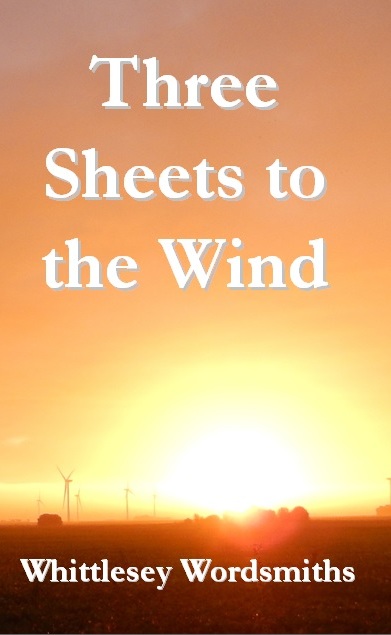
We have revised the front cover see the new version in the picture below.
Three Sheets to the Wind new cover
An unusual job for a woman.
Written by Philip Cumberland
The guided bus was an unlikely getaway vehicle but it had served her well in the past.
“It’s their vanity that makes them vulnerable,” she thought.
She had been glad to get out of her waitresses uniform and into something less conspicuous. What politician full of their own importance could refuse a honorary doctorate from one of the World’s leading universities.
“More wine Mr Ambulant? Yes the glass is a bit dirty I will fetch you a clean one, it was the Chardonnay wasn’t it?”
Fortunately she was in the kitchen when he collapsed, nowhere near him. When they all rushed to see what was happening she was in the ladies, changing into jeans and a tee shirt. Then nipping out through the Masters Garden, a bit naughty really but not as naughty as poisoning someone. Thank goodness for the tourists it was easy to get swallowed up by the crowds. The bus was waiting in its bay when she arrived at Drummer Street. Some of those academics can be a bit handy when a girl is carrying a tray of drinks, the women were the worst, and she wondered if she had been missed yet. The Park and Ride is very useful you can park for free get into the middle of Cambridge then back to pick your car up. The luggage lockers are useful too, the jiffy bag was waiting for her, Sheila; would count it later no doubt the next job was in there too. The policemen standing waiting by her car was a surprise; she noticed them as she closed the locker door, always sensible to park near the bus shelter. Fortunately the bus was still waiting to move on, she climbed back on flashed her day rider ticket at the driver then found a seat next to the emergency exit.
As she left the bus at Huntingdon she thought it was always good to have a plan B. The elderly Renault Clio was inconspicuous and could be left anywhere there wasn’t yellow lines or parking restrictions and not arouse suspicion.
She drove to her cottage in Wistow, it wasn’t her main address but somewhere out of the way when life got complicated. There was a wry smile on her face as she opened the Chardonnay and poured herself a glass, then reached for the Jiffy bag. There was a few hundred in twenties and tens for expenses the lottery ticket was there too, the photograph of her next target was a bit of a surprise. He was nasty and odious enough but well connected. He must have really upset someone Sheila thought, then remembered a story, well a rumour of a story circulating, that would explain it. No matter how big a bully you are there is always someone bigger and nastier.
Right, London on Monday to claim her lottery prize and perhaps a call to Grandmother. The Sunday papers headlined Ambulant’s sudden death, a heart attack was the suspected cause, hopefully the college had secured his endowment before his demise.
Sunday passed quietly and it was the eleven thirty train from Huntingdon that delivered Sheila to Kings Cross. The newsagents was small scruffy and inconspicuous, located in an anonymous side street.
The newsagent, certainly the man behind the counter was elderly bald and stooped, his nicotine stained fingers suggested that a few years ago a cigarette would have been between his lips. He took Sheila’s blank lottery ticket and took it into a back room, returning after a few minutes he inserted it into the lottery machine. The tune from the machine announced it was a winner,
“Congratulations young lady five numbers and the bonus ball, £180,000 and 3p. You will have to contact Camelot, keep your ticket safe.”
Sheila called Camelot’s special number using her mobile phone, identified herself, scanned the QR code and arranged the transfer of the winnings to her bank in Switzerland. She left the newsagents with a copy of the Times and found a call box.
The call was answered on the third ring by an elderly male doddery voice,
“Hello, who is it?”
“Mr Wolf?”
“Yes,” the voice had changed to something younger, no longer doddery.
“Its Little Red Riding Hood, can I speak to Grandmother please?”
“Grandmother’s familiar voice was calm as usual,”
“Hello my dear, what can I do for you?”
“I am a little concerned about my next job.”
“He has got a history of heart problems, you are an attractive young lady and very clever.”
“There were two policemen waiting by my car at St Ives after Mr Ambulant died.”
“You should have a list of your next targets engagements in your pack; you need to be very careful about how you manage things.”
“I am a little concerned about how quickly the police were onto my car.”
“The payment for the next job will be a lot higher; a million from the Euro-millions draw there is less interest in those winners.”
“Who else knows about me and the next target?”
“Just Mr Woolf, the Woodcutter and myself.”
“What about the Witch?”
“She’s dead.”
“Okay then, I will do it but won’t notify you first, once I have done the job I will phone you.”
“That’s absolutely fine my dear, we know you well enough by now.”
Whittlesey Wordsmiths latest collection is nearing completion.
At our last meeting after a secret ballot we agreed on the title Three Sheets to the Wind for our new book. The title in no way reflects the sobriety or otherwise of any of the members; it says here.
It is an excellent collection of short stories and poetry, as are all our collections, as soon as we have a publication date we will announce it to the world.
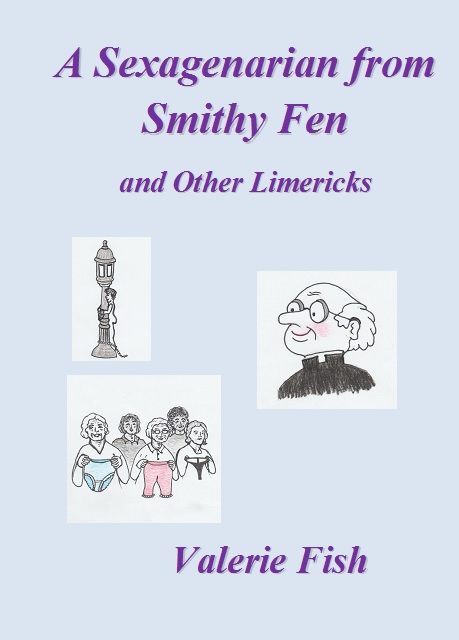
Whittlesey Wordsmiths are working hard to have their latest collection of short stories, poems and limericks, ready for publication in the autumn. There will be one more month of submissions; then the final editing, cover designs to be finished, together with illustrations and title selection. We are working towards a September or October launch in time for our fans to buy copies as Christmas presents or as a special treat for themselves.
These and books from other local authors will be available at Whitt Litt 2
This will be our third annual collection, our fifth if we include last year’s two Christmas collections. We are thinking of offering our three major books as a boxed set (probably without a box though) or possibly all five as a set. We welcome people’s thoughts and suggestions.
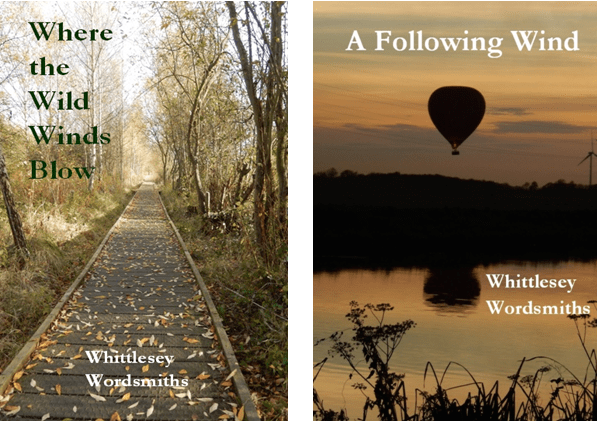
Where the Wild Winds Blow and A Following Wind,the first two collections.
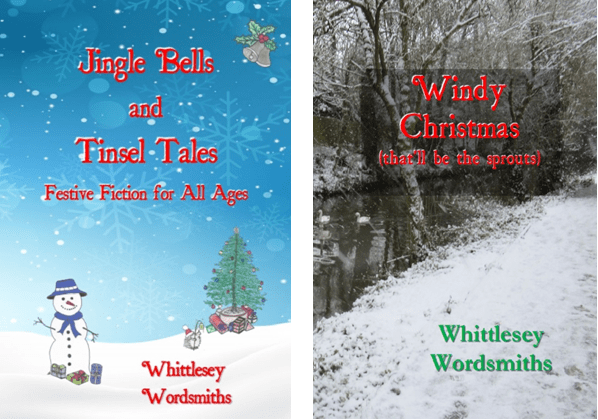
Jingle Bells and Tinsel Tales and Windy Christmas ( that’ll be the sprouts). Our Christmas collections
Before it all started
“Straight of limb, true of eye, steady and aglow.”
We have posted these two pieces before but they are timely just now, the first was written by Val Fish and is about the poem For the Fallen by Laurence Binyon. The second piece is a poem written by another of our brilliant Whittlesey Wordsmiths TessaThomson.
For the Fallen by Laurence Binyon
Inspiration for ‘For The Fallen’
Laurence Binyon composed his best known poem while sitting on the cliff-top looking out to sea from the dramatic scenery of the north Cornish coastline. A plaque marks the location at Pentire Point, north of Polzeath. However, there is also a small plaque on the East Cliff north of Portreath, further south on the same north Cornwall coast, which also claims to be the place where the poem was written.
The poem was written in mid September 1914, a few weeks after the outbreak of the First World War. During these weeks the British Expeditionary Force had suffered casualties following its first encounter with the Imperial German Army at the Battle of Mons on 23 August, its rearguard action during the retreat from Mons in late August and the Battle of Le Cateau on 26 August, and its participation with the French Army in holding up the Imperial German Army at the First Battle of the Marne between 5 and 9 September 1914.
Laurence said in 1939 that the four lines of the fourth stanza came to him first. These words of the fourth stanza have become especially familiar and famous, having been adopted by the Royal British Legion as an Exhortation for ceremonies of Remembrance to commemorate fallen Servicemen and women.
Laurence Binyon was too old to enlist in the military forces, but he went to work for the Red Cross as a medical orderly in 1916. He lost several close friends and his brother-in-law in the war.
For The Fallen
With proud thanksgiving, a mother for her children,
England mourns for her dead across the sea.
Flesh of her flesh they were, spirit of her spirit,
Fallen in the cause of the free.
Solemn the drums thrill; Death august and royal
Sings sorrow up into immortal spheres,
There is music in the midst of desolation
And a glory that shines upon our tears.
They went with songs to the battle, they were young,
Straight of limb, true of eye, steady and aglow.
They were staunch to the end against odds uncounted;
They fell with their faces to the foe.
They shall grow not old, as we that are left grow old:
Age shall not weary them, nor the years condemn.
At the going down of the sun and in the morning
We will remember them.
They mingle not with their laughing comrades again;
They sit no more at familiar tables of home;
They have no lot in our labour of the day-time;
They sleep beyond England’s foam.
But where our desires are and our hopes profound,
Felt as a well-spring that is hidden from sight,
To the innermost heart of their own land they are known
As the stars are known to the Night;
As the stars that shall be bright when we are dust,
Moving in marches upon the heavenly plain;
As the stars that are starry in the time of our darkness,
To the end, to the end, they remain.
Laurence Binyon 1869 – 1943
For the Fallen we will remember them.
Postscript
I was privileged to perform on the stage at The Broadway Peterborough in 2014, in the ‘Sing for Life’ ladies’ choir, to raise funds for a new wing at Sue Ryder’s Thorpe Hall Hospice.
On the 100th Anniversary of the beginning of the First World War, we sang an adaptation of ‘For The Fallen’ by Rowland Lee.
In the final few bars, we were as stunned as the audience as poppies came falling from above onto the stage. It was a moment I’ll always treasure.
Valerie Fish
Lest we Forget
Written by Tessa Thomson
With the annual remembrance commemorations drawing near, Tessa has marked this time of reflection with a poem expressing not only her thoughts but those of most of us.
LEST WE FORGET – NOVEMBER 11TH
We travel in our hordes to see that place
Wherein our loved ones fell without a trace.
Marked and blanketed by stones in white
Covering that great plain, that great site.
Farm hand boys and factory workers
Friends from villages, schools or clubs.
Joined together, left their homeland
To lie in fields, decayed amongst the scrub.
Their voices call out still across that plain
Feet are still heard thundering, inches gained.
Hearts were in their mouths, panting fast
As struggling, reached their enemies at last.
The bodies lay before them in the mud
Mingled with the dirt, the crimson blood.
No time to mourn a brother or a friend
Just pass them by, praying for the end.
Guns that deafened now are stilled
Armies of boys and men were killed.
Some now just memories to their kin
Some carried pain through life like sin
They gave us freedom, free to speak
They made us strong not kept us weak
We live in peace and fear no man
They gave their lives so we just can
Tessa Thomson
At the going down of the sun and in the morning we will remember them
We can only have spring after winter the sun can only rise after it has gone down.
If you’re after something different from the ‘run of the mill’ crime thriller , this is the book for you. Set around Cambridge and the Fens, we are introduced to D.C.I. Cyril Lane, affectionately known as Arnold, a likable quirky character , who surprised me nearing the end by showing a lovely sensitive side. A mixture of science, history and time travel, an interesting and entertaining read. I do hope this isn’t the last we hear of Arnold, this is crying out for a sequel.
If you live in Whittlesey this book is available at Parker’s Newsagents.
Out in the fens we pay little heed to the passing of the seasons and for us older residents we have some difficulty even with the passing of the days. Knowing where we are in the week is a task often fraught with difficulty, a calendar is a useful tool.
Early in the new year before Father Christmas had settled down for a good sleep. Whittlesey Wordsmiths resumed work on two Christmas collections.
Jingle Bells and Tinsel Tales for younger readers or listeners and Windy Christmas for the grown-ups.
The books are authored by the talented bunch of writers known as Whittlesey Wordsmiths.
The children’s book is illustrated by Jane Pobgee, both books were edited by our resident wizardess Cathy Cade.
The covers are a joint effort with contributions from Stephen Oliver, Cathy Cade, Val Chapman, Jane Pobgee, Wendy Fletcher and Philip Cumberland
The covers are complete and these excellent books should be rolling off the presses within the next few weeks.
Wendy signing copies of her autobiography The Railway Carriage Child at the launch in Whittlesey
At the U3A meeting in Whittlesey yesterday I did a book signing session for my first book, The Railway Carriage Child. Over 100 members attended and the afternoon was a great success. I hope that is encouraging to all would-be writers who may be having doubts about stepping onto the public platform with their own creations
Wendy Fletcher with her first print copy of The Railway Carriage Child
About two years ago I joined the local U3A Writing group as its third member. At my first meeting in Whittlesey’s Not Just Cafe, I was able to read a chapter from Wendy Fletcher’s autobiography. It was unfinished and hadn’t a title but it was for me a work of exceptional quality. Today the first-ever print copy was delivered to Wendy she brought it to the Writing Group (Whittlesey Wordsmiths) meeting opened the envelope and together with Wendy, we had the first sight of it.
This is the foreword
Against a backdrop of the Cambridgeshire fens, lies the
small market town of Whittlesey. Here are many features
of historical and architectural interest, including two
medieval churches, a 17th century Butter Cross and rare
examples of 18th century mud boundary walls.
Less well known, but still quite remarkable, are the pair of
Victorian railway carriages which stand just outside the
town.
Originally built for Great Eastern Railways in 1887,
they have been home to Wendy’s family since 1935.
Now, for the first time, Wendy shares the fascinating
story of her childhood, growing up as a Railway Carriage
Child in the mid to late 20th century.
With a wonderful memory for detail, she paints a
picture so vivid that we are there with her.
Through the eyes of an exuberant child, whose
imagination outpaced her years, we meet the characters
central to her life: an ancient Granny, still governed by the
old fen traditions of an earlier era, a domineering Mother,
a long-suffering Father, and Grandfather who died before
her birth but still inspires her dreams.
With the humour of hindsight, Wendy brings alive a
time when life moved at a gentler pace.
The final chapter follows Wendy as she returns to live
in the carriages as an adult, continuing the renovation and
preservation, to ensure that they survive for another









 Whittlesey Wordsmiths